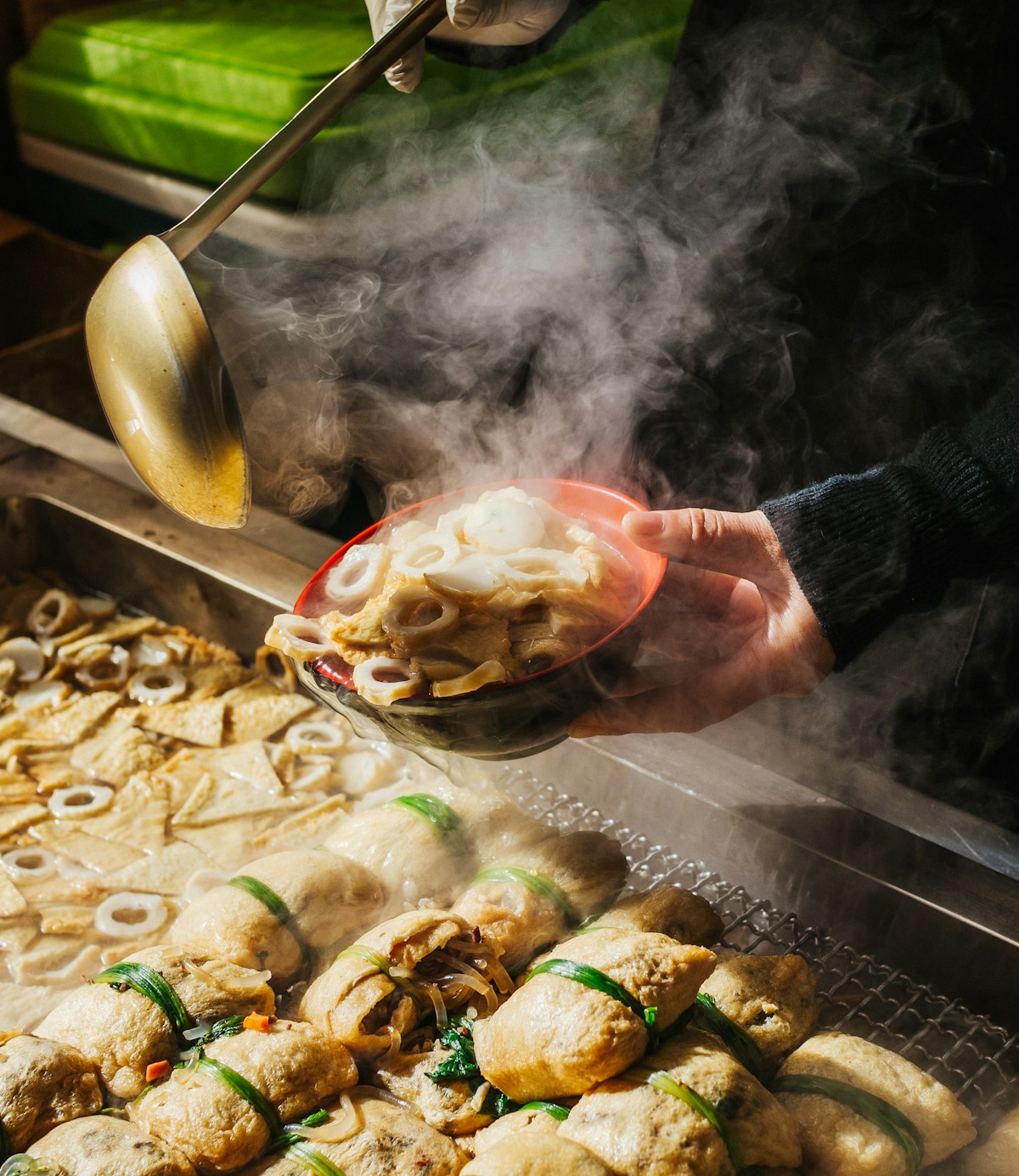
Gyeongju’s food identity is shaped by its status as a heritage city - the culinary culture here is quieter, more vegetable-focused, and more rooted in traditional Korean forms than the meat-heavy BBQ cities or the seafood ports along the coast. The signature dish is a pastry that has been made on the same street for nearly a century. The rice wine is local. The market lunches are straightforward and honest.
For where to stay in the city, see our Gyeongju accommodation guide. For the heritage sites, see things to do in Gyeongju.
Hwangnam-Ppang - Gyeongju’s Most Famous Souvenir Food
A small, rounded wheat pastry filled with sweet red bean paste, hwangnam-ppang has been made in Gyeongju since 1939. The Hwangnam Bread bakery (황남빵) on Hwangnam-daero - the main street running south of Tumuli Park - operates from the original location and remains the definitive version.
- Price: approximately KRW 1,500–1,800 per piece; sold in boxes of 10 or 20 (KRW 15,000–36,000) as of 2026
- Opening hours: approximately 08:00–20:00; lines form at weekends and during peak tourist periods
- Texture: soft, slightly sweet outer pastry with a dense, mildly sweet red bean interior. Best eaten warm, within a few hours of purchase.
Multiple competitor bakeries sell similar pastries on the streets around Tumuli Park. The Hwangnam Bread original is the most visited; comparisons are a matter of personal preference.
Hwangnam-ppang are sold at every tourist shop in the city and at Gyeongju Station and the bus terminal - but the bakery versions are fresher.
Ssambap - Leaf-Wrapped Rice Set Meal
Ssambap is a communal-style meal built around short-grain rice, multiple side dishes (banchan), and a selection of lettuce, perilla, and other leaves used to wrap small parcels of rice, meat, and condiments. Gyeongju has a number of ssambap restaurants serving the meal in full traditional style - a carved wooden table with 15–20 small dishes.
The meal is slower and more ceremonial than standard Korean restaurant dining. Restaurants near Tumuli Park and along the main road toward Anapji Pond serve ssambap as their primary offering.
- Price: approximately KRW 12,000–20,000 per person for a full ssambap set as of 2026
Bibimbap
Gyeongju’s bibimbap has less national reputation than Jeonju’s version but is widely served and of good quality at traditional Korean restaurants throughout the city. The local version often emphasises local mountain vegetables (mountain spinach, bracken fern, wild sesame leaves) in the toppings mix.
- Price: approximately KRW 10,000–15,000 per bowl as of 2026
The best bibimbap restaurants in Gyeongju are typically small traditional restaurants near the historic core - not the obvious tourist-facing places, but the ones without English menus that fill up at 12:00 with local workers.
Jjimdak - Braised Chicken
A nationally popular Korean dish that appears on most menus in Gyeongju’s restaurants. Chicken braised in a sweet and savoury soy-based sauce with glass noodles, potato, and spring onion. A hearty, warming dish suitable for colder weather visits.
- Price: approximately KRW 18,000–28,000 for a single serving at most Gyeongju restaurants as of 2026
Sundae - Korean Blood Sausage
A street food found across Korea but with a long presence in Gyeongju’s market culture. Sundae is steamed pig intestine stuffed with glass noodles, pork blood, and barley - served sliced with a salt-and-pepper dipping condiment or with a spicy dipping sauce. It sounds alarming and tastes considerably less confronting than it reads.
At Gyeongju Central Market, sundae stalls serve it for approximately KRW 4,000–6,000 per portion as of 2026. It is typically eaten with seasoned liver and lung slices (soondae assortment) at market stalls.
Makgeolli - Gyeongju Rice Wine
Makgeolli is a milky, slightly fizzy rice wine with low alcohol content (typically 5–8%). The Gyeongju area has a local makgeolli production culture, and several bars (makgeolli-jip) near the historic core and around Tumuli Park serve it by the jug.
- Price: approximately KRW 3,000–6,000 per large bottle or jug as of 2026
Traditional Korean makgeolli bars serve the wine alongside free or low-cost anju (drinking snacks) - typically seasoned dried squid, kimchi pancake, or doenjang-based vegetable dishes. In Gyeongju the snack quality at the better makgeolli bars tends toward substantive dishes rather than token side plates.
Vegetable Bibimbap and Temple Food
Given Gyeongju’s Buddhist heritage (Bulguksa and Seokguram are active Buddhist sites), there is a long tradition of temple cuisine - vegetable-only cooking using mountain produce and fermented condiments. A small number of restaurants near Bulguksa and in the historic core serve meals in this style.
Temple food meals are quiet and considered - no garlic, onion, or meat. The flavour comes from fermented pastes (doenjang, gochujang) and the quality of the seasonal produce.
Gyeongju Central Market
The main daily market near the old bus terminal in central Gyeongju. Open from approximately 07:00 through the afternoon; busiest in the morning.
What to find:
- Street food vendors: sundae, tteokbokki (spicy rice cakes), hotteok (sweet pancakes)
- Fresh produce: local vegetables, mountain herbs, dried goods
- Sit-down stalls serving gukbap (rice in broth), doenjang jjigae (soybean paste stew), and bibimbap at lunch prices (approximately KRW 6,000–10,000 per bowl)
The market is primarily a local shopping destination rather than a tourist attraction, which keeps prices honest and the atmosphere non-performative. Worth a morning visit for breakfast and a wander.
Hwangnam-Daero Street Food Strip
The street running south from Tumuli Park toward the Hwangnam Bread bakery has accumulated a range of street food stalls and small cafés alongside the heritage souvenir shops. Standard options include tteokbokki, fried mandu (dumplings), and Gyeongju-branded snacks. Useful for a quick lunch between site visits without sitting down at a restaurant.
For food tours and cultural experiences in Gyeongju, including guide-led market visits and temple food meals, advance booking is recommended.