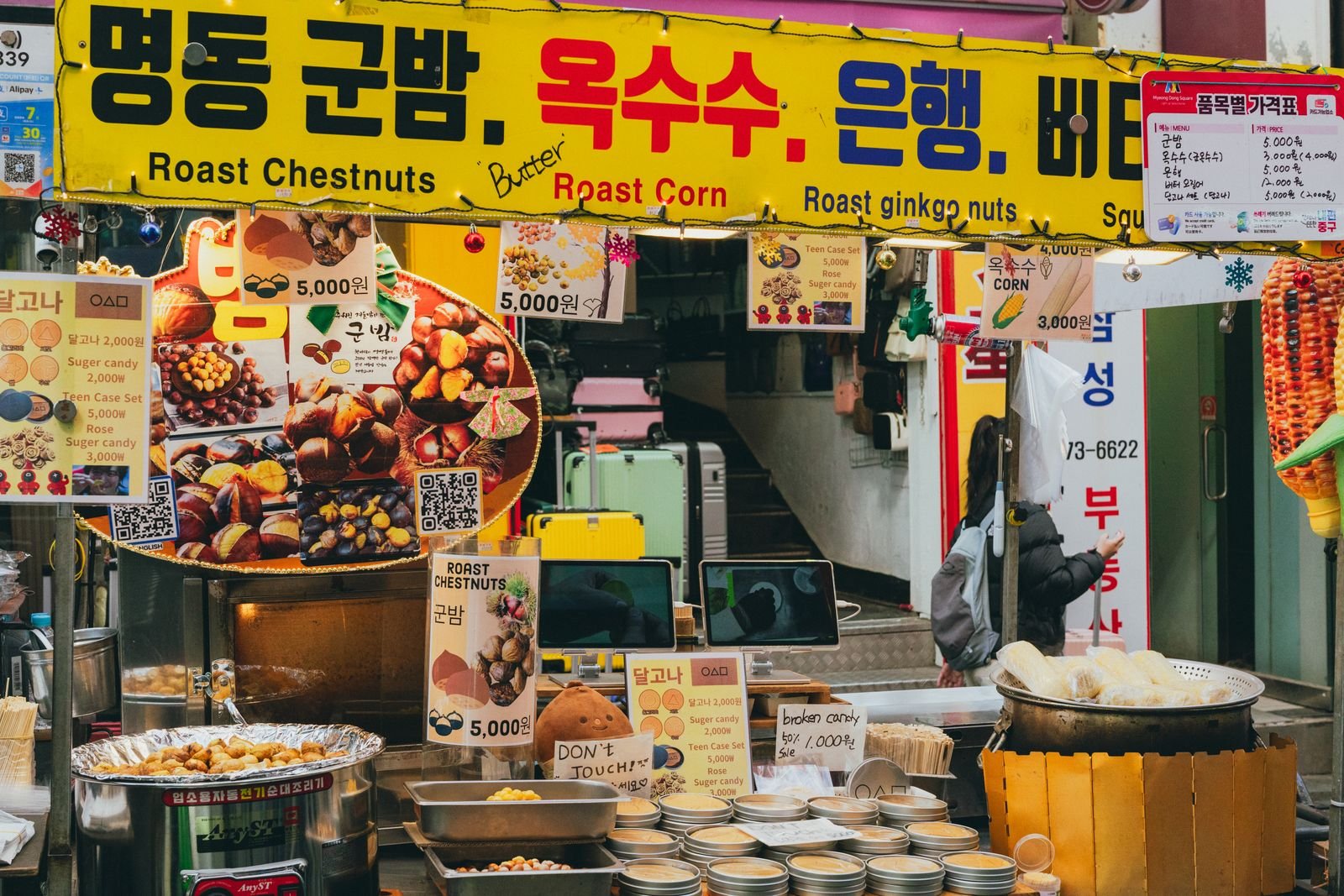
South Korea is one of the easiest countries to shop in. Prices are fixed, labels are often bilingual in tourist areas, and the range runs from KRW 1,000 snacks to handmade lacquerware. This guide is organised by area, because what you buy depends on where you are standing: crafts in Insadong, beauty in Myeongdong, textiles and antiques around Gwangjang and Dapsimni, and snacks at Lotte Mart and Daiso. Prices are approximate and as of 2026.
For the VAT refund process and duty-free rules, see our tax refund and shopping guide. This page covers what to put in your bag.
Insadong: Crafts, Hanji and Tea
Insadong is the standard stop for traditional gifts, and also the place where you most need to be selective. Many stalls on the main street sell mass-produced items, so look for shops that name their makers or run a workshop.
What to buy here
- Hanji (traditional mulberry paper) goods: notebooks, cards and small boxes, roughly KRW 8,000 to 20,000. Hanji lamps and larger framed pieces cost KRW 30,000 and up.
- Ceramics and celadon: a small cup or dish costs about KRW 15,000 to 50,000 in a gallery shop; handmade pieces from named potters cost more.
- Brass and lacquerware: chopstick and spoon sets from about KRW 20,000, with quality sets at KRW 60,000 and above.
- Tea: citron (yuja), jujube and barley tea in gift tins from about KRW 8,000 to 25,000.
- Ssamziegil market: a spiral multi-level complex of independent makers, good for jewellery, small prints and handmade stationery.
Allow two hours. Pair it with a walk through nearby Bukchon and the palaces. A guided Seoul tour is a good way to cover the area with someone who can point out genuine craft workshops.
Myeongdong: Beauty, K-Pop and Fast Fashion
Myeongdong is dense with beauty stores, and the competition between them keeps promotions frequent. The largest Olive Young branch and many brand flagships sit within a few blocks of Myeongdong Station (Line 4, exit 6). Our Olive Young Korea guide covers the flagships, app coupons and returns.
What to buy here
- Sheet masks: about KRW 1,500 to 3,000 each, or boxes of 5 to 10 for KRW 10,000 to 25,000.
- Sunscreen, cleansers and toners: most mid-range Korean brands sell for KRW 15,000 to 35,000, often 30 to 50% below overseas prices.
- Cushion compacts and lip tints: KRW 12,000 to 30,000 depending on the brand.
- K-pop albums and merchandise: albums from about KRW 20,000 to 30,000, official lightsticks at KRW 40,000 and above.
Spend at least KRW 15,000 per receipt at a registered store and you can claim VAT back; keep your passport with you. Free samples are generous, so you can try before committing. Our K-beauty and head spa guide explains which treatments and products are worth the time.
Gwangjang and Dapsimni: Textiles, Antiques and Local Finds
Gwangjang Market is better known for food, but its upper floors are a long-running textile and bedding market. Silk and hanbok fabric, ready-made hanbok and traditional-patterned bedding are sold here at wholesale-leaning prices. Lengths of fabric start around KRW 10,000 per metre for cotton and rise sharply for silk. The ground floor is best for a bindaetteok snack before you shop; see our Korean street food guide for what to order.
Dapsimni (Line 5, a short ride away) is Seoul’s long-established antique and second-hand furniture district. It is for collectors and people with time, not for a quick gift run, and shipping large items home is expensive. Small finds such as old tea sets, vintage Korean posters and brass items are easier to carry.
Lotte Mart, Supermarkets and Daiso: Snacks and Cheap Gifts
For the cheapest, most packable gifts, go to a supermarket. Lotte Mart (the Seoul Station branch is popular with visitors) has dedicated aisles for gift sets and tax-free service.
Packable food list
- Seasoned laver (gim): snack packs of 8 to 10 sheets for about KRW 3,000 to 6,000, or gift boxes for KRW 10,000 to 25,000.
- Honey butter almonds and chips: about KRW 3,000 to 7,000 per bag.
- Instant noodles: Shin Ramyun and Buldak (fire noodle) packs, KRW 1,000 to 1,800 each.
- Korean snack staples: Choco Pie, Pepero, Banana Kick, and yakgwa or hangwa sweets in gift boxes.
- Gochujang and doenjang pastes: small tubs from KRW 4,000 to 8,000.
- Red ginseng products: sticks, candy and tea from KRW 15,000 to 50,000. Check labels for the “Korea Ginseng” origin and avoid unmarked street-stall products.
- Soju and makgeolli: about KRW 1,500 to 2,500 per bottle at a supermarket, but heavy and fragile.
Daiso is the best source for small gifts: stationery, kitchenware, phone accessories and Korea-exclusive items, mostly KRW 1,000 to 5,000. Korean stationery in general (Hobonichi-style diaries, gel pens, stickers) is a major draw at Artbox and Kyobo Bookstore.
Customs: Kimchi, Liquids and Alcohol
Kimchi. Many people buy vacuum-sealed kimchi to take home. Whether it is allowed depends entirely on your destination. Some countries accept commercially packaged, sealed products, while others restrict it because of fish or meat ingredients. Check your own customs website before you buy, and declare it on arrival. Freshly made kimchi from a market is a bad choice for flights: it ferments and may leak. Choose factory-sealed packs and double-bag them.
Liquids. Cabin baggage limits liquids to 100 ml per container. Sauces, pastes, skincare, perfume, soju and kimchi all go in checked luggage. Duty-free liquids sealed in a tamper-evident bag can usually go in the cabin, but if you connect through another country, rules can differ.
Alcohol. Your arrival country sets a duty-free limit, typically 1 to 2 litres of spirits. Soju and makgeolli count towards it, and makgeolli does not travel well because it keeps fermenting.
Meat, dairy and plant products. Dried meat, some ginseng roots and seeds can be restricted on entry. Packaged ginseng products are generally easier than raw roots.
For the latest rules, see the Korea Customs Service for departures and your own country’s border agency for arrivals. General visitor information is on the official Korea tourism site.
Realistic Price Ranges (as of 2026)
| Item | Where | Typical price (KRW) |
|---|---|---|
| Sheet mask (single) | Olive Young | 1,500 - 3,000 |
| Sunscreen or toner | Olive Young | 15,000 - 35,000 |
| Hanji notebook | Insadong | 8,000 - 20,000 |
| Celadon cup | Insadong | 15,000 - 50,000 |
| Seasoned laver pack | Lotte Mart | 3,000 - 6,000 |
| Instant ramyun pack | Supermarket | 1,000 - 1,800 |
| Red ginseng sticks | Supermarket | 15,000 - 50,000 |
| Daiso gift items | Daiso | 1,000 - 5,000 |
| K-pop album | Myeongdong | 20,000 - 30,000 |
Smart Shopping Tips
- Time your trip to sales. Olive Young runs large seasonal sales a few times a year, with the biggest discounts at those events.
- Buy beauty last. Pick up masks and creams in the final days so they travel less, and claim VAT at the airport if the store is set up for it.
- Pay with a travel card. Some market stalls are cash only, so carry won or a WOWPass card.
- Leave bag space. Wrap breakables in clothes and weigh your bag before the airport.
Base yourself centrally to make shopping runs easy: browse hotels in Seoul close to Myeongdong, Insadong or Dongdaemun.
Plan Your Trip
✈️ Book your flights to South Korea 🛡️ Get travel insurance 📱 Stay connected with an eSIM