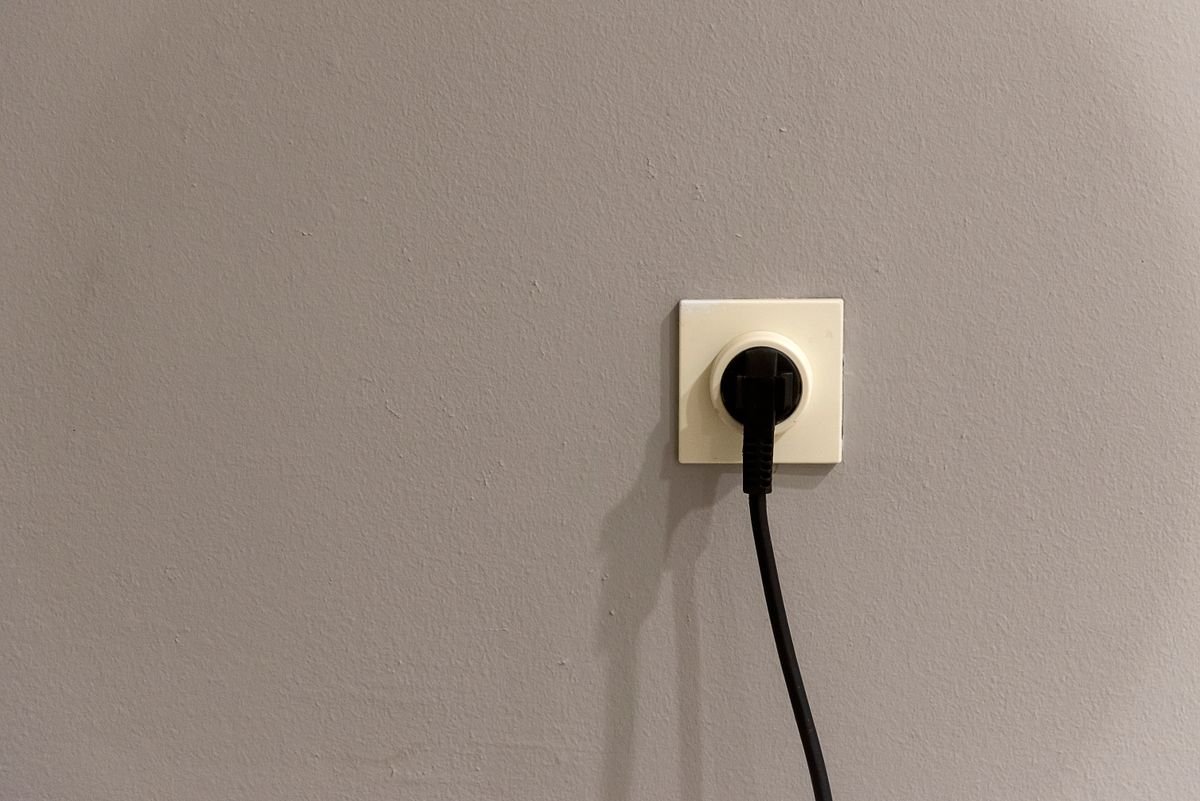
South Korea runs on 220V at 60Hz and uses the round two-pin sockets known as Type C and Type F. If your plugs are European, you can plug in directly. If you are coming from North America, the UK, Australia or Japan, you need a small adapter, and a handful of single-voltage appliances may need more than that. This guide covers the plug types, what the voltage means for your devices, and the practical details we have found matter once you are actually in Seoul, Busan or Jeju. For the rest of your luggage, see our South Korea packing list.
Plug types and voltage at a glance
| Item | South Korea |
|---|---|
| Plug types | Type C and Type F |
| Voltage | 220V |
| Frequency | 60Hz |
| Socket style | Two round holes, often recessed in the wall |
| Pin diameter | Standard 4.8 mm round pins |
Type C is the flat-sided two-pin “Europlug”. Type F is the same layout with earthing clips on the sides, often called a Schuko plug. Korean sockets accept both. Type A and B flat-pin plugs, as used in the United States, Canada and Japan, do not fit at all, and neither do the three-pin plugs of the UK (Type G) or Australia and New Zealand (Type I).
Korea’s 60Hz frequency matches North America, but the voltage does not. That is the detail that catches people out: your plug may be 60Hz-compatible, yet the socket delivers roughly twice the voltage a North American appliance expects.
Which adapter to pack
From the UK, Ireland, Australia and New Zealand: a Type C adapter (or any universal adapter with round pins) is enough. Mains in these countries is 230-240V, close enough to Korea’s 220V that nothing else is needed.
From the United States and Canada: pack a Type A/B to Type C adapter. Your phone, laptop, camera and power-bank chargers are almost certainly dual-voltage, so the adapter alone is fine. Be careful with hair dryers, straighteners and electric shavers rated only for 110-120V.
From Japan: Japanese sockets run on 100V, so travel gadgets are sometimes rated 100V only. Check the label before plugging in.
From continental Europe: nothing needed. Your plug fits, and your devices are already on 220-240V.
We recommend a compact universal adapter with at least one USB-C port, so a single socket can charge a phone and run a laptop brick. Our practical tip is to choose a slim body. Some Korean sockets are recessed into the wall, and bulky adapters may not seat properly in them.
Do your devices need a voltage converter?
Read the small print on the charger or the back of the device. If it says “INPUT: 100-240V, 50/60Hz”, you are fine with just a plug adapter. This covers:
- Smartphones, tablets and smartwatches
- Laptops and camera chargers
- Power banks and wireless earbud cases
- Most e-readers and portable game consoles
If it says “120V” or “110V” only, it will run too fast, overheat or fail. Common offenders are cheap travel hair dryers, curling irons and some beard trimmers. The simplest fix is to leave them at home. Most Korean hotels supply hair dryers, and shops sell inexpensive replacements if you need one.
A converter is a heavy, hot piece of kit and rarely worth carrying for a one- or two-week trip.
What to expect in hotels, guesthouses and hanok
Modern hotels in Seoul, Busan and Jeju City generally have several sockets near the bed, and many newer rooms add USB ports. Business hotels and some guesthouses often use a key-card slot by the door that switches power on, so the room’s lights and outlets go dead when you take the card out. If you want to charge a phone while you are out for the day, ask the front desk for a spare card or use a socket that is not on the switched circuit.
Traditional hanok stays, for example in Bukchon in Seoul or in Jeonju Hanok Village, usually have fewer sockets, and these are sometimes low on the wall for floor-level sleeping arrangements. A short extension lead or multi-port USB charger helps. Hostels and guesthouses are often generous with sockets but have limited bed-side access, so a longer charging cable is useful.
Charging on the move
Korea is well set up for travellers who live on their phones. Many cafes, including large chains, have sockets at seats, and many Seoul metro stations and public spaces offer phone charging points. KTX high-speed trains typically have power outlets at or near seats, though availability varies by train type and seat, so do not rely on one for a long journey. Carry a 10,000 mAh power bank for days of heavy map and translation use. If you rely on an eSIM, charging matters more, and our Korea SIM card and eSIM guide covers the options.
Remember that airlines restrict power banks. They must go in carry-on baggage, not checked luggage, and individual airlines set limits on capacity and number. Check your airline’s current rules before you fly.
Where to buy an adapter or charger in Korea
If you forget your adapter, it is easy to fix:
- Incheon Airport: convenience stores and electronics shops in both terminals stock travel adapters.
- Convenience stores (CU, GS25, 7-Eleven): sell basic chargers, cables and some adapters. Open late and found near almost every hotel.
- Daiso: inexpensive plug adapters and cables, with outlets in most Korean cities.
- Hi-Mart and electronics areas such as Yongsan Electronics Market in Seoul: wider choice, including multi-port chargers and extension leads.
Expect to pay from about 2,000 to 10,000 won for a basic adapter or cable, and more for a quality multi-port charger, as of 2026.
Quick checklist before you fly
- Check each charger’s input range for “100-240V”.
- Pack one compact adapter with USB ports, or two if you travel as a couple.
- Leave 110V-only hair dryers and styling tools at home.
- Bring a power bank in your carry-on.
- Keep a charging cable long enough to reach a bedside socket.
Our guide to South Korea Public Holidays 2026-27 pairs well with this one.
Once your power is sorted, the next step is turning your trip into a plan. Browse Seoul tours and activities to fill your first days, or read our first-time visitor guide for the bigger picture.