Staying connected in South Korea is straightforward. Korea has some of the fastest mobile networks in the world — SK Telecom, KT, and LG U+ all run extensive 5G infrastructure — and tourist SIM options are readily available at every airport. Here is a complete breakdown of your options for 2026.
Physical SIM Cards: Airport Pickup
The easiest option for most visitors is picking up a tourist SIM on arrival at Incheon Airport. All three major carriers have staffed counters in the arrivals halls:
Incheon Terminal 1 (T1): KT Roaming Centre (4F Departure, 1F Arrival), SK Telecom (1F Arrival), LG U+ (1F Arrival). Desks are open approximately 07:00–22:00.
Incheon Terminal 2 (T2): KT and SK Telecom have counters near the arrivals exit. LG U+ is available through vending machines and a staffed kiosk.
At Gimhae International Airport (Busan), KT and SK Telecom have desks in the arrivals hall at similar hours.
KT Tourist Data SIM
KT (formerly Korea Telecom) runs the largest roaming desk at Incheon and is typically the most prominent counter you will see on arrival. Their tourist data SIM options as of 2026:
| Plan | Data | Price (approx.) |
|---|---|---|
| 5-day unlimited | Unlimited (3G after 5GB daily) | KRW 24,000 |
| 10-day unlimited | Unlimited (3G after 5GB daily) | KRW 33,000 |
| 20-day unlimited | Unlimited (3G after 5GB daily) | KRW 45,000 |
| 30-day unlimited | Unlimited (3G after 5GB daily) | KRW 55,000 |
KT uses their LTE and 5G network. Coverage is strong across Seoul, Busan, Gyeongju, Jeju, and all major highways. In remote hiking areas such as Seoraksan and Hallasan, coverage on KT can be slightly patchy at altitude — usually not an issue below the treeline.
KT SIM cards include a local Korean phone number. This is useful if you need to verify accounts via SMS or call local restaurants and guesthouses. Tethering (hotspot) is permitted on all tourist plans.
SK Telecom Tourist SIM
SK Telecom is Korea’s largest carrier by subscriber count and has arguably the most consistent coverage in rural areas. Tourist SIM prices as of 2026:
| Plan | Data | Price (approx.) |
|---|---|---|
| 7-day unlimited | Unlimited (3G after 1GB daily) | KRW 28,000 |
| 14-day unlimited | Unlimited (3G after 1GB daily) | KRW 38,000 |
| 30-day unlimited | Unlimited (3G after 1.5GB daily) | KRW 65,000 |
SK Telecom’s daily high-speed data cap is lower than KT’s before throttling kicks in, which can be frustrating if you stream video heavily. For maps, messaging, and email, neither limit is noticeable in practice. SK Telecom SIMs also include a Korean phone number.
LG U+ is the third option and tends to offer slightly lower prices with competitive coverage in Seoul and Busan. If the KT and SK desks have queues, LG U+ is a solid alternative.
Airalo eSIM for Korea
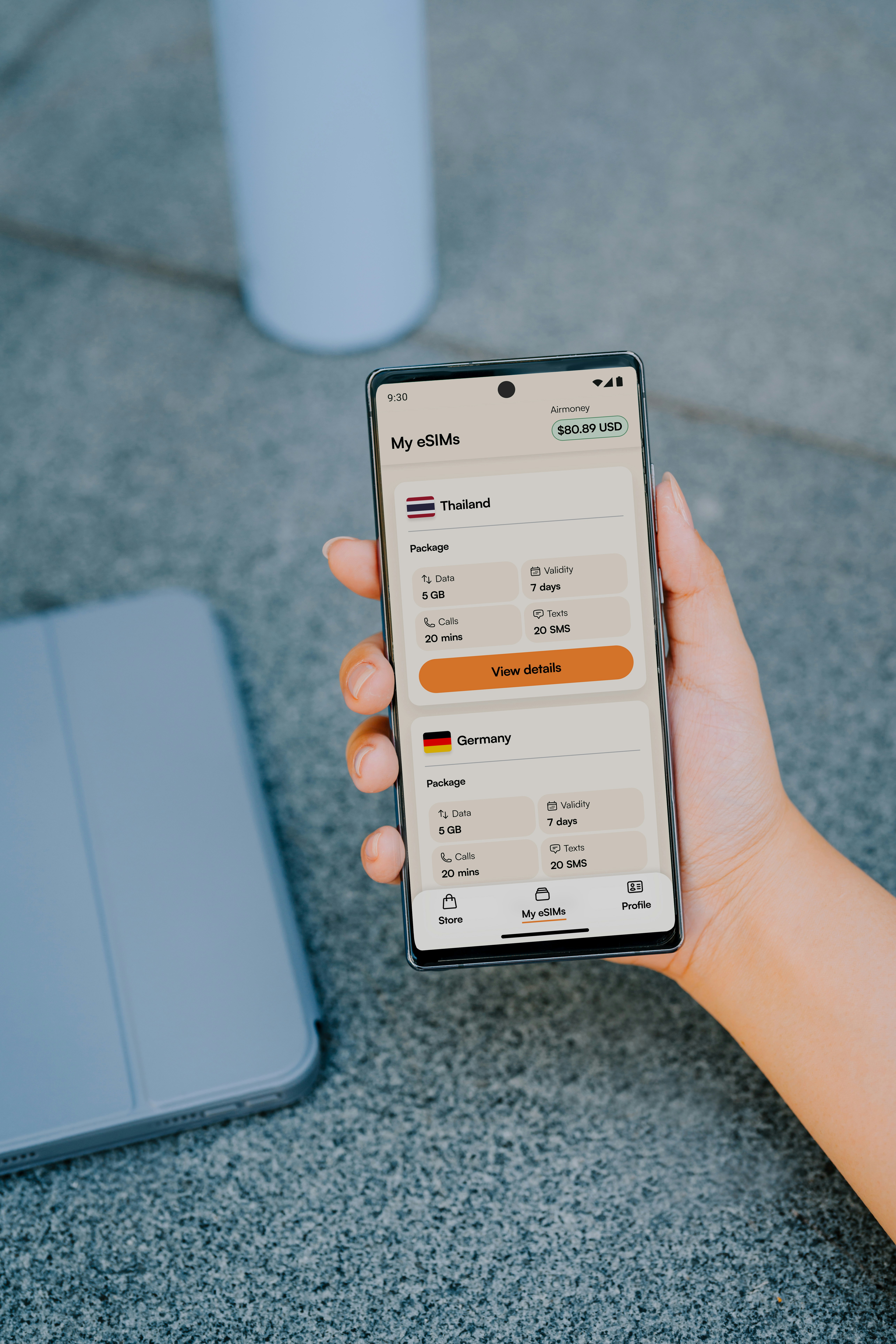
Airalo offers data-only eSIM plans for South Korea through the Airalo app. The main advantage is instant activation — you buy and install the eSIM before leaving home, so you have data the moment your plane lands. Airalo uses SK Telecom’s infrastructure in Korea.
Approximate Airalo Korea eSIM prices (USD, as of 2026):
| Data | Validity | Price |
|---|---|---|
| 1 GB | 7 days | ~$4.50 |
| 3 GB | 30 days | ~$9.00 |
| 10 GB | 30 days | ~$21.00 |
| 20 GB | 30 days | ~$35.00 |
Airalo Korea eSIMs are data-only — no local Korean phone number. If you need a Korean number (for example to make reservations or receive SMS codes), stick with a physical SIM from KT or SK Telecom.
Is your phone eSIM compatible? Most flagship phones from 2020 onwards support eSIM: iPhone XS and later, Samsung Galaxy S21 and later, Google Pixel 4 and later. Check your phone settings under “Mobile Data” or “SIM & Network” — if you see an “Add eSIM” option, you are compatible. Note that some phones purchased in China do not support eSIM due to carrier restrictions.
Physical SIM vs eSIM: Which to Choose?
| Physical SIM (KT/SK) | Airalo eSIM | |
|---|---|---|
| Price (30 days) | KRW 55,000–65,000 | ~USD 35 (20GB) |
| Korean phone number | Yes | No |
| Hotspot | Yes | Yes |
| Activation | On arrival | Before departure |
| Compatible phones | All | Dual-SIM/eSIM phones |
| Best for | Long stays, SMS needs | Short trips, data-only |
Pocket WiFi Option
All three carriers and several third-party companies offer pocket WiFi rentals (also called “egg WiFi” locally) at Incheon Airport. These are useful for groups sharing data or for travellers with older phones that do not support eSIM.
Typical pocket WiFi rental prices as of 2026: KRW 3,500–6,000 per day including unlimited or capped data. A deposit of approximately KRW 30,000–50,000 is typically held on your card and refunded on return of the device. Return the device at the airport before departure at the carrier’s rental counter.
Buying a SIM Elsewhere in Korea
If you did not pick up a SIM at the airport, convenience stores (GS25, CU, Emart 24) sell pre-paid SIM cards from KT and SK Telecom, though English instructions on the packaging can be limited. Carrier stores (KT, SKT, LGU+) in city centres can register a SIM with your passport — staff in Seoul’s Myeongdong, Itaewon, and Hongdae branches often speak basic English.
Daangn (당근마켓) and Naver Café are where locals buy and sell second-hand SIMs, but navigating these as a non-Korean speaker is not recommended.
Coverage Summary
All three carriers provide excellent 4G/5G coverage in Seoul, Busan, Gyeongju, Jeonju, Daejeon, Daegu, and Jeju City. Coverage extends to most KTX train routes and the Seoul Metro. Rural areas of Gangwon Province and the upper slopes of Hallasan are the main exceptions — expect occasional signal drops. For Seoraksan hiking, download offline maps (Naver Map or Google Maps) before you start.