Where to Stay in Suwon: Best Areas for Every Traveller
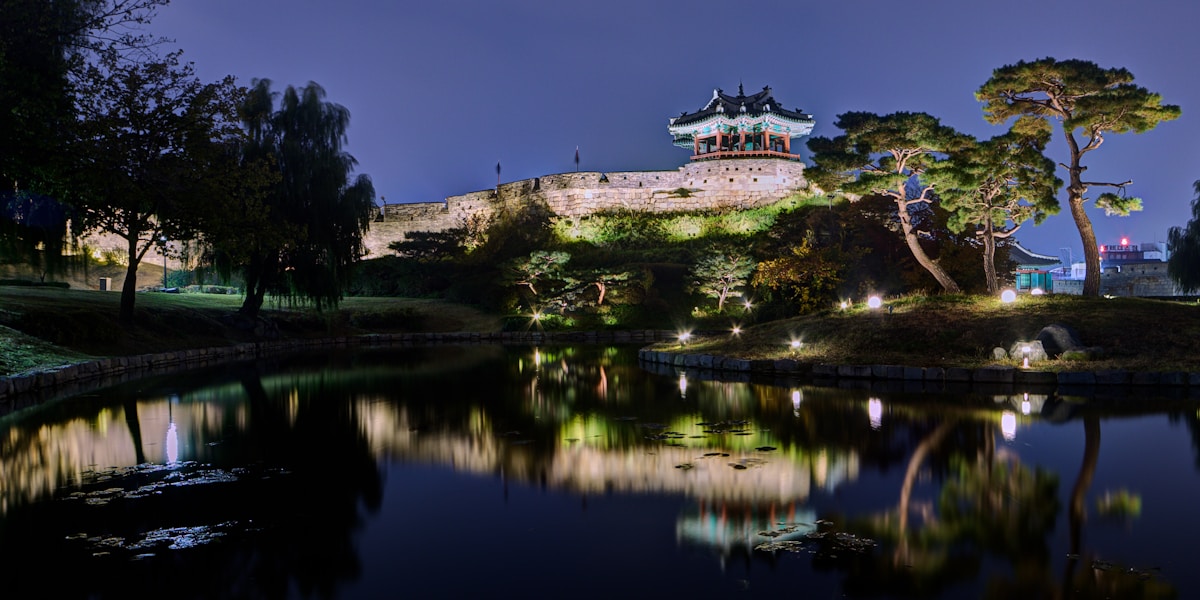
Suwon is a large city and its accommodation spreads across several distinct zones. Most leisure visitors base themselves near Suwon Station for transport convenience, but the Paldalmun Gate area, Yeongtong district, and the corridor near Samsung Digital City each have their own logic depending on why you are visiting. Here is a breakdown of the main areas with price ranges as of 2026.
Near Suwon Station (Best for Transit and Tourism)
The area around Suwon KTX and metro station is the most practical base for visitors coming from Seoul on a day trip extended to an overnight. The station is directly connected to Seoul via KTX (approximately 30 minutes) and Seoul Metro Line 1 (50–60 minutes), making it easy to move between cities.
From the station, Paldalmun Gate is a 15–20 minute walk through the city centre — a straightforward route that passes along the main shopping street before arriving at the fortress approach. The famous Paldalmun Galbi Street (short rib BBQ restaurants) is roughly the same distance.
Budget accommodation: Smaller motels and guesthouses near the station start from approximately KRW 50,000–80,000 per night for a private room as of 2026. Quality varies; properties on the main streets close to the station are generally cleaner and better managed than those tucked into narrower side streets.
Mid-range hotels: Business hotels within a 10-minute walk of the station typically run KRW 100,000–180,000 per night. These offer the most consistent standard for solo travellers and couples who want reliable Wi-Fi, air conditioning, and western-style bathrooms without paying upscale prices.
Upscale: The most notable upscale property near the station is the Novotel Ambassador Suwon — a full-service four-star hotel with a restaurant, fitness centre, and meeting facilities, typically priced from approximately KRW 150,000–200,000 per night as of 2026.
Who it suits: First-time visitors to Suwon, day-trippers extending to one night, travellers using Suwon as a base for both the fortress and day trips to Korean Folk Village.
Paldalmun Gate and Fortress Area
The area immediately north and west of Paldalmun Gate — the southern entrance to Hwaseong Fortress — has a smaller concentration of accommodation but maximum proximity to the fortress itself. Staying here means you can walk directly through the gate and be on the fortress walls within minutes of leaving your accommodation.
Hotels and guesthouses in this zone tend to be smaller and less branded than the station area options. There are a handful of well-regarded boutique-style guesthouses that occupy traditional-style buildings or have been renovated to complement the historical character of the neighbourhood.
Prices in this area run approximately KRW 70,000–130,000 per night as of 2026 for a comfortable private room. The zone is more characterful than the station area — narrow streets, traditional markets, and the fortress walls visible from several vantage points — but has fewer dining and transport options immediately at hand.
Who it suits: History-focused visitors who want to be as close to the fortress as possible, travellers who prefer smaller neighbourhood hotels over branded business properties, those planning to walk the full fortress circuit early in the morning before day-trippers arrive.
Downsides: Fewer convenience stores and cafes than the station zone. Getting to Seoul by public transport requires a bus or taxi to Suwon Station. Street parking is limited and the narrow streets around the historic district are not car-friendly.
Yeongtong District
Yeongtong is Suwon’s fastest-growing district — a modern residential and commercial area in the eastern part of the city that has attracted significant development off the back of its proximity to Samsung Digital City, one of Samsung Electronics’ largest campuses.
Accommodation here skews toward newer business hotels and serviced apartments, priced typically at KRW 90,000–160,000 per night as of 2026. The properties are generally more recently built and have larger rooms than comparable-priced options near the station. The area has a strong cafe and casual dining scene driven by a younger residential demographic.
Who it suits: Business travellers visiting Samsung or local tech companies, visitors who prefer newer accommodation and a modern urban environment, families staying for a longer period who want apartment-style accommodation.
Downsides: Getting to Hwaseong Fortress requires around 20–30 minutes by bus or taxi. The area has less historical character than the city centre. If sightseeing at the fortress is your priority, the station area is a more convenient base.
Samsung Digital City Corridor
The stretch of Suwon between the city centre and Samsung Digital City — stretching through the Maetan-dong and Ingye-dong areas — has business-focused accommodation primarily serving corporate visitors to the Samsung campus and adjacent supplier companies.
Properties here include international business hotel brands offering reliable standards at KRW 120,000–200,000 per night as of 2026. The trade-off is location — this corridor sits between the historical sights and the modern Yeongtong district without being optimally convenient for either.
Who it suits: Corporate visitors, business travellers whose meetings are spread across multiple company sites in Suwon, those who have arranged accommodation through corporate travel programmes.
Practical Booking Notes
Suwon does not have the same seasonal accommodation pressure as coastal cities — demand spikes around major public holidays (Chuseok, Seollal) and the Suwon Hwaseong Cultural Festival in October, when fortress events draw large crowds.
Outside of these periods, same-week booking is generally possible. For the October festival, booking one to two months ahead is advisable, particularly for properties near the fortress and Paldalmun Gate.
International booking platforms (Booking.com, Expedia) have good coverage of Suwon’s larger hotels. The many smaller guesthouses and motels near the station and fortress are better found through Korean platforms such as Naver Hotel or Yanolja, which have more comprehensive listings.
For specific hotel recommendations across different budgets, see our best hotels in Suwon guide. For what to see and do during your visit, read our things to do in Suwon guide. The Suwon city hub covers transport links, local tips, and how to get here from Seoul.
Book an experience
Top-rated experiences in Suwon Travel Guide
The highest-rated tours and activities in Suwon Travel Guide. Book today, cancel free if plans change.
Frequently Asked Questions
- Should I stay in Suwon or Seoul for visiting Hwaseong Fortress?
- If Hwaseong Fortress is your main purpose, staying in Suwon makes sense — the fortress is 15 minutes from Suwon Station on foot and you can start early before the day-trip crowds arrive from Seoul. Suwon is also 30–60 minutes from Seoul by KTX or subway, so an overnight is easy to combine with a Seoul base.
- What is the best area to stay in Suwon for tourists?
- Near Suwon Station is the most practical base for first-time visitors — good metro and KTX connections to Seoul and a short walk to the Paldalmun Gate area and the fortress. The Paldalmun Gate area itself has fewer hotels but immediate access to the fortress and the famous galbi street.
- Is Yeongtong a good place to stay in Suwon?
- Yeongtong is a modern residential and tech district in eastern Suwon, popular with business travellers visiting Samsung or local tech companies. The area has newer hotels and good cafes but is further from Hwaseong Fortress — budget around 20 minutes by bus or taxi to the historical sites.
Sorted your stay?
Here's how to get there — and get around once you arrive.
Airport Transfer
Fixed-price airport pickup to Suwon Travel Guide — driver meets you at arrivals, no haggling.
Book a Transfer →We may earn a small commission — at no extra cost to you.