Incheon Travel Guide
Korea's oldest Chinatown, Japanese colonial port district, and island ferries - Incheon rewards a day beyond the airport transit hall.
Guides for Incheon
Incheon is South Korea’s third-largest city and the gateway for most international travellers entering the country. Its airport, consistently rated among the best in the world, handles the majority of long-haul arrivals. Most travellers pass through without stopping - but Incheon’s old port district and the islands surrounding the city offer real reasons to pause.
The city has a layered history: it was forcibly opened to foreign trade in 1883 under Japanese pressure, making it an early entry point for Western and Japanese influence. That history left a distinctive urban fabric in the Jung-gu area, where Japanese colonial architecture and a functioning Chinatown sit close together.
Getting to Incheon
From Seoul: The AREX (Airport Railroad Express) connects Seoul Station to Incheon Airport in 43 minutes (express) or 66 minutes (all-stop). For central Incheon rather than the airport, take Seoul Metro Line 1 to Incheon Station - the journey takes around 70 minutes from central Seoul. Buses also connect the two cities.
From Incheon Airport to the city: AREX all-stop trains serve stations within Incheon city. Taxis are available; the city centre is around 30–40 minutes by road depending on traffic.
What to See
Incheon Chinatown - adjacent to Incheon Station, this is the only official Chinatown in South Korea. Chinese residents have lived in this neighbourhood since the 1880s. The main commercial street sells jajangmyeon (black bean noodles) which became associated with the Korean-Chinese community here and is now a staple across South Korea. Chinese-style architecture mixes with Korean and Japanese-era buildings.
Open Port Area (Gaehangno) - the historic port district with preserved Japanese colonial-era buildings from the late 19th and early 20th centuries. The area includes the former Japanese First 18th Bank branch and the Incheon Open Port Museum, which documents the history of the treaty port era.
Jayu Park - the first Western-style park in Korea, laid out in 1888. It sits on a hill above Chinatown with views over the port. A statue of General Douglas MacArthur marks the site - the 1950 Incheon Landing, which turned the course of the Korean War, was launched near here.
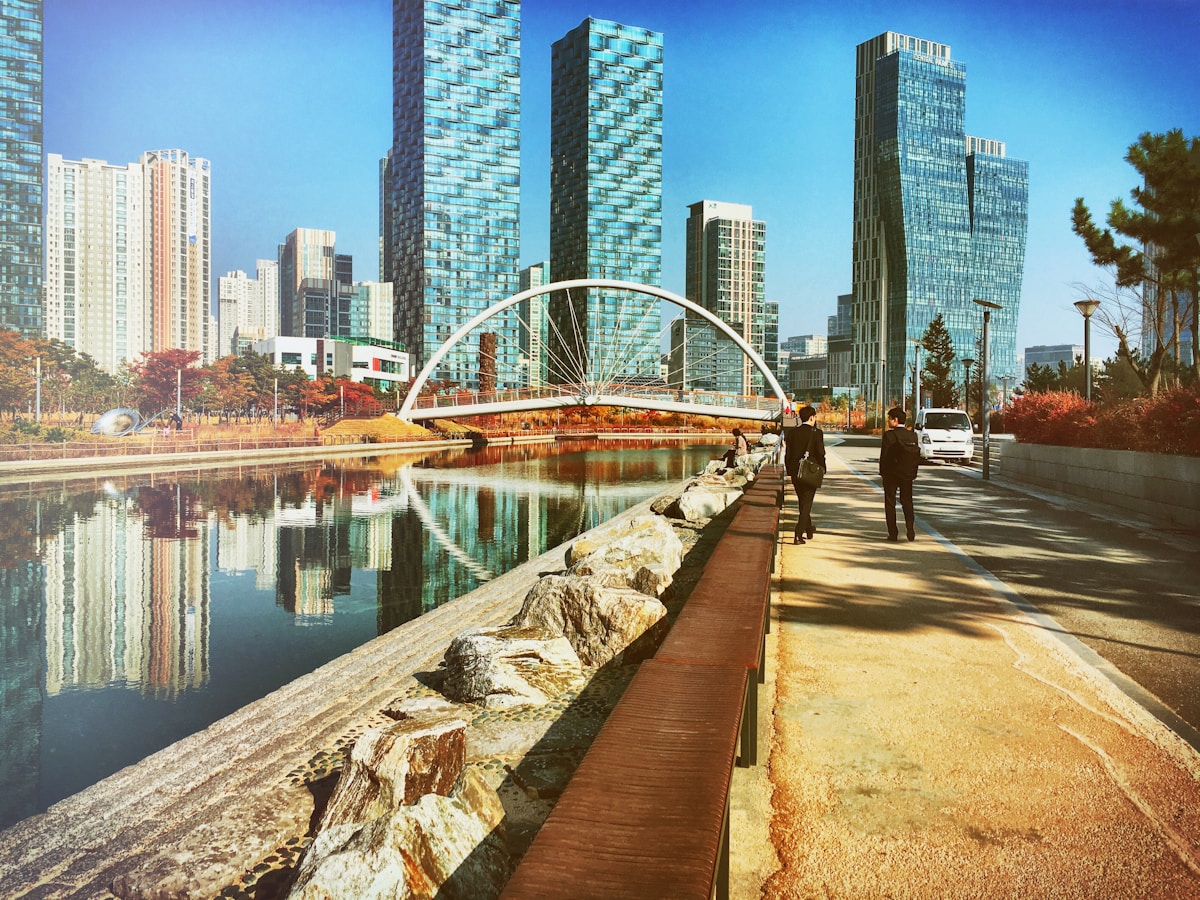
Songdo International Business District - a purpose-built smart city district reclaimed from the sea, begun in the 2000s. Central Park within Songdo is a pleasant green space with water access. The district has a very different character from old Incheon - futuristic and planned. Worth seeing as an example of Korean urban development ambition.
Ganghwado Island - a large island accessible by bridge about 30 km north of Incheon. It holds Bronze Age dolmens (UNESCO-listed), Goryeo dynasty earthworks, and Manisan mountain with a ceremonial altar used since ancient times. A separate half-day or full-day excursion from central Incheon.
Where to Stay in Incheon
For accommodation options across all budgets, see our Incheon hotels guide.
Food and Drink
Jajangmyeon - wheat noodles in a thick black bean and pork sauce - has its modern Korean form rooted in Incheon’s Chinese community. Eating it in Chinatown near where the dish developed has a certain logic. Jjamppong (spicy seafood noodle soup) is the standard companion dish.
The port area has seafood restaurants serving fresh catches from the surrounding Yellow Sea. Fried chicken and beer (chimaek) culture is as present here as anywhere in Korea.
For tours around Incheon and day trips to the surrounding islands, see activities in the Incheon area.
Explore Incheon in Detail
- Things to do in Incheon - Chinatown, Wolmido, the Open Port area, Songdo, and Ganghwa Island with entry fees
- Best hotels in Incheon - from the Sheraton Grand Songdo to budget motels near the subway
- Incheon food guide - jajangmyeon, seafood at Wolmido, and Korean-Chinese fusion dishes
Is Incheon worth exploring beyond the airport? Our Seoul vs Incheon comparison covers what Incheon’s Chinatown, Songdo, and Wolmido offer travellers - and whether staying in Incheon rather than Seoul makes sense for your trip.
Upcoming Events in Incheon
Jinju Lantern Festival 2026
Jinju Lantern Festival 2026 runs 3 to 12 October on the Nam River. Paper lanterns mark the 1592 Battle of Jinju: tickets, schedule, and how to get there.
Frequently Asked Questions
- Is Incheon worth visiting beyond the airport?
- Yes, the Jung-gu (central district) area around Chinatown and the old Japanese colonial port has genuine character and is worth a half-day or full day. The surrounding islands, particularly Ganghwado, add more options for those staying longer.
- How long does it take to get from Incheon Airport to Seoul?
- The AREX express train takes 43 minutes to Seoul Station. All-stop AREX trains take 66 minutes and cost less. Buses serve various destinations across the city and take 60–90 minutes depending on traffic and destination.
- Can I visit Incheon as a stopover during a long layover?
- Yes - the city centre is about 40 minutes from the airport by AREX. A layover of at least 5–6 hours would give you time to see Chinatown, Jayu Park, and the port area before returning. Incheon Airport also has a free transit cultural programme within the airport for shorter layovers.
Book an experience
Top experiences in Incheon
Explore the best tours and activities in Incheon, with instant confirmation and free cancellation on most bookings.