Where to Stay in Busan: Best Areas Explained
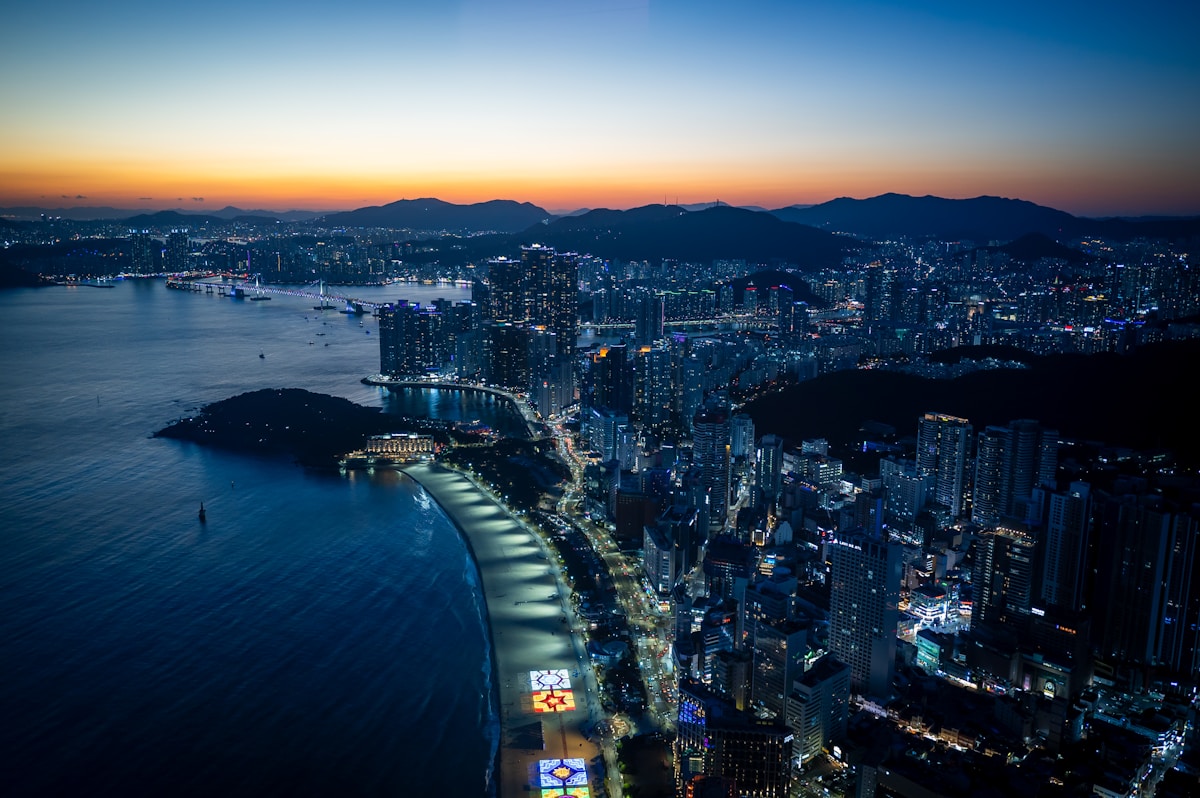
Busan is compact enough that staying in any central neighbourhood puts you within a 30-minute metro or bus ride of the main sights. The choice between areas comes down to whether you prioritise beach access, city-centre convenience, budget, or a quieter local experience.
Haeundae — Beach District
Haeundae is the most popular base for tourists in Busan and the first neighbourhood most visitors consider. The beach is 1.5 km of sand with lifeguard supervision in summer, a promenade of restaurants and cafés, and a dense concentration of hotels ranging from business-class to luxury.
What it’s good for: Beach access, resort feel, seafront dining, proximity to Marine City’s contemporary restaurant and bar scene. The Dongbaekseom (Camellia Island) park is a short walk away.
Drawbacks: It is the busiest and most expensive area. Prices are significantly higher in July and August. The high-rise hotel density can feel impersonal.
Price ranges as of 2026:
- Budget guesthouses and pensions: KRW 60,000–100,000 per night
- Mid-range hotels (3-star): KRW 150,000–250,000 per night
- Upscale and luxury hotels: KRW 280,000–600,000+ per night
Haeundae metro station (line 2) connects easily to Seomyeon (12 minutes) and across the city.
Seomyeon — Central Commercial District
Seomyeon is Busan’s commercial and transport hub, positioned roughly in the centre of the city where metro lines 1 and 2 intersect. It has the densest concentration of shops, restaurants, bars, and nightlife outside of Nampodong, and is the most practical base for visitors covering Busan’s full range of sights.
What it’s good for: Transport connections across the city, eating and drinking, shopping. Equidistant from most attractions. Easier to reach Jagalchi Market, Gamcheon, and Busan Station than from Haeundae.
Drawbacks: No beach access — Haeundae is about 12 minutes by metro but the beach feel is not there. Less atmospheric than Nampo-dong for exploring on foot.
Price ranges as of 2026:
- Budget guesthouses: KRW 50,000–90,000 per night
- Mid-range hotels: KRW 120,000–200,000 per night
- Business hotels (Marriott, Lotte): KRW 200,000–350,000 per night
The Seomyeon area has good restaurant density for Korean BBQ, pojangmacha street food, and late-night eateries.
Nampo-dong and Gwangbok-ro — Old Town / Budget Traveller Base
Nampo-dong, in the southern part of central Busan near the waterfront, is the city’s historical commercial core. It is close to Jagalchi Fish Market, BIFF Square, Gukje Market, Yongdusan Park (Busan Tower), and Gamcheon Village.
What it’s good for: Budget accommodation options, proximity to markets and sights, lively street food culture. The Gwangbok-ro Fashion Street is a pedestrianised shopping strip nearby. It is the most walkable base for covering the Nampo area’s attractions.
Drawbacks: Further from Haeundae Beach than Seomyeon. More dated infrastructure in some older guesthouses.
Price ranges as of 2026:
- Budget guesthouses and yeogwan: KRW 30,000–70,000 per night
- Mid-range hotels: KRW 90,000–160,000 per night
Nampo metro station (line 1) is the main hub for the area.
Gwangalli — Beach Area with Quieter Feel
Gwangalli Beach is smaller and less crowded than Haeundae, in the Suyeong district east of central Busan. The beach faces the Gwangan Bridge (lit at night in colour-changing LED displays) and is backed by a row of independent cafés and bars at generally lower prices than the Haeundae strip.
What it’s good for: Beach access without Haeundae’s crowds, a younger independent café and bar scene, excellent bridge views at night. Better value for money than Haeundae.
Drawbacks: Fewer hotel options than Haeundae or Seomyeon. Less transport connectivity than Seomyeon.
Price ranges as of 2026:
- Budget guesthouses and pensions near the beach: KRW 50,000–90,000 per night
- Mid-range hotels: KRW 120,000–200,000 per night
Gwangalli metro station (line 2) is a 5-minute walk from the beach.
Near Busan Station — Arrival District
Staying near Busan Station (the terminus for KTX trains from Seoul) makes sense for short visits centred on day trips or an efficient transit through the city. The area has reasonable accommodation density and is a 5-minute walk from Chinatown and the Choryang neighbourhood.
Price ranges as of 2026:
- Budget to mid-range accommodation: KRW 50,000–150,000 per night
The area is functional rather than atmospheric, but transport connections are direct.
Practical Notes
Busan’s metro covers the city well. A T-money card works across metro and buses. Peak season pricing (July–August beach season, October BIFF) can push rates up 30–60% above off-season. Book early for those periods.
For named hotel recommendations at each price point, see our best hotels in Busan guide. For the full picture of what the city has to offer, read the Busan travel guide.
Book an experience
Top-rated experiences in Busan Travel Guide
The highest-rated tours and activities in Busan Travel Guide. Book today, cancel free if plans change.
Frequently Asked Questions
- Is Haeundae the best place to stay in Busan?
- Haeundae is the most convenient option if beach access is your priority. For sightseeing across the city, Seomyeon is more centrally positioned. Budget travellers get better value in Nampo-dong near the city's historical core.
- How far is Haeundae from Busan Station?
- Busan Station to Haeundae station is approximately 30 minutes by metro (line 1 to Seomyeon, then line 2). By taxi it is about 25 minutes in normal traffic and costs approximately KRW 20,000–30,000.
- When should I avoid the Haeundae area?
- Late July and August are peak beach season — Haeundae Beach is extremely crowded and hotel prices rise sharply. The Busan International Film Festival (October) also drives accommodation prices up city-wide for about two weeks.
Sorted your stay?
Here's how to get there — and get around once you arrive.
Airport Transfer
Fixed-price airport pickup to Busan Travel Guide — driver meets you at arrivals, no haggling.
Book a Transfer →We may earn a small commission — at no extra cost to you.