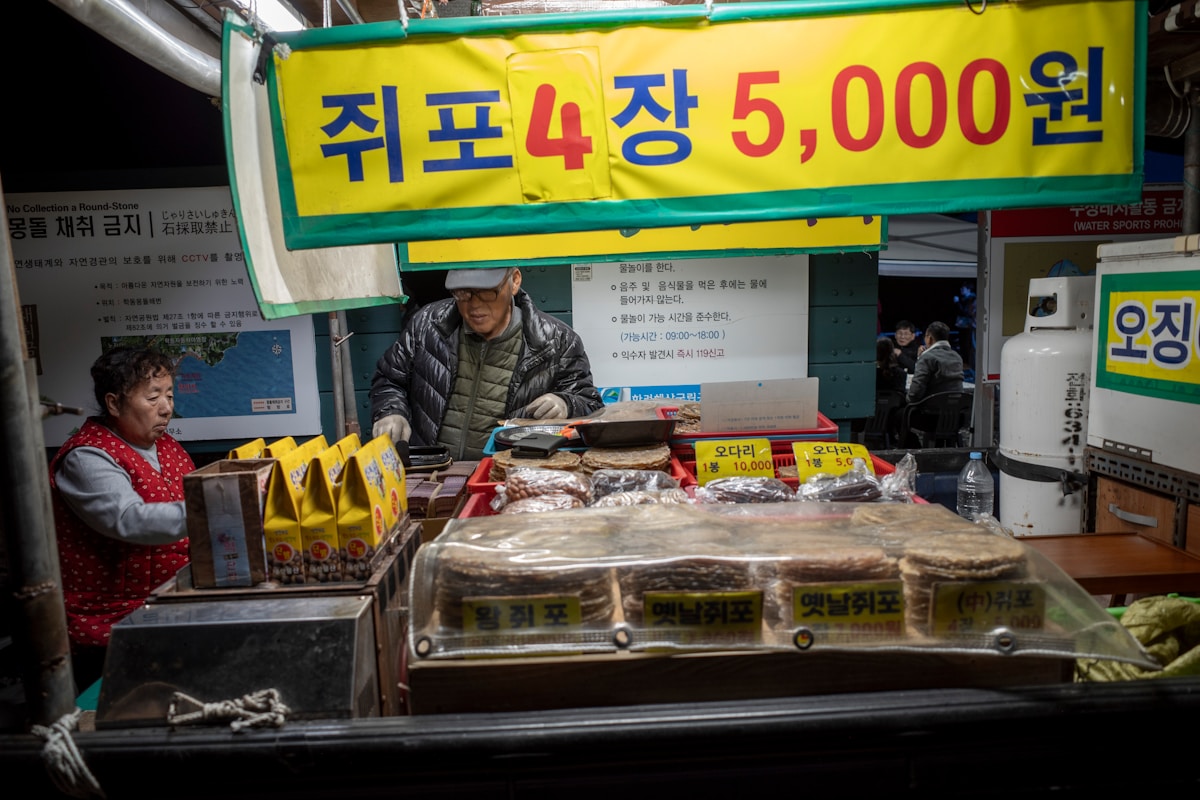
Yeosu’s position on the south coast between the Namhae island chains and the Yeosu Peninsula gives it some of the freshest seafood in South Korea. The city’s food identity is built on raw marinated fish and shellfish, grilled hairtail, octopus hot pot, and a distinctive regional kimchi made from the mustard leaf of Dolsan Island. Eating in Yeosu is one of the strongest arguments for visiting the city alongside the scenery. Here is a practical guide with prices as of 2026.
Dolsan Gat Kimchi (갓김치)
Gat kimchi - kimchi made from mustard leaf - is the defining side dish of the Yeosu table. The Dolsan variety has a sharper, more peppery bite than the napa cabbage kimchi standard across most of Korea, and the fermentation produces a complex flavour that local cooks credit to the alkaline volcanic soil of Dolsan Island. It appears alongside every meal in Yeosu restaurants, including those that do not otherwise specialise in local cuisine.
For the best version, the Dolsan Island market area (accessible via Dolsan Bridge from central Yeosu) has stalls selling fresh and fermented gat kimchi by weight. The market is particularly active on days ending in 3 and 8 (the traditional five-day cycle). A 1 kg bag of fresh kimchi costs approximately KRW 10,000–15,000 as of 2026.
Galchi Jorim (갈치조림) - Braised Hairtail Fish
Galchi (hairtail or scabbard fish) is a silver, ribbon-shaped fish common in South Korean waters and central to the cuisine of the south coast cities. In Yeosu, the standard preparation is galchi jorim - braised in a spicy-sweet gochujang sauce with radish, spring onions, and garlic. The fish has a soft, slightly fatty flesh that absorbs the sauce well.
Geomun-ro Restaurant Street (거문로 식당 골목) near the central bus terminal area has multiple galchi jorim specialists. A portion sized for two costs approximately KRW 20,000–30,000 as of 2026. Most restaurants also serve galchi gui (grilled hairtail) for approximately the same price.
Raw Crab - Ganjang Gejang (간장게장) and Yangnyeom Gejang (양념게장)
Raw marinated crab is available in two versions in Yeosu: ganjang gejang (soy sauce-marinated, served cold and intensely savoury) and yangnyeom gejang (spicy red gochujang-marinated). Both are usually eaten mixed directly into rice.
The Yeosu Seobu Susanmul Market (여수 서부수산물시장) near the waterfront is the place to see the full range of live crab and seafood available, and several restaurants adjacent to the market buy directly from the stalls to serve same-day dishes. A meal including crab gejang, rice, soup, and banchan costs approximately KRW 35,000–55,000 per person as of 2026.
Nakji (낙지) - Spicy Octopus Dishes
Octopus dishes are prominent across Yeosu menus. Nakji bokkeum (stir-fried octopus with gochujang and vegetables) is the most common preparation - fiery, savoury, and best eaten with plain rice to moderate the heat. Nakji jeongol (octopus hot pot) is a more elaborate version with noodles, vegetables, and seafood in a bubbling spicy broth, typically served at the table over a small burner.
Nakji Bokkeum Sikdang restaurants in the Geomun-ro area serve individual and shared portions. A standard nakji bokkeum for one costs approximately KRW 10,000–14,000 as of 2026. Sharing a nakji jeongol hot pot sized for two typically costs KRW 30,000–40,000.
Waterfront Dining near Odongdo
The promenade between Odongdo and the Expo Ocean Park area has a concentration of mid-range and casual restaurants with outdoor terraces facing the harbour. These tend to serve grilled fish sets, shellfish, and seafood jjigae (stew) at prices approximately 20–30% above the comparable inland restaurant options.
Seafood set meals (haemul jeongshik) at waterfront restaurants typically include rice, soup, multiple banchan, and a mixed seafood main for approximately KRW 18,000–28,000 per person as of 2026. In summer (July–August), the waterfront becomes very busy in the evenings; booking for sit-down restaurants on weekends is advisable.
Yeosu Seobu Market Food Hall
The interior of the Seobu fish market has a food hall on the upper level where vendors prepare fresh seafood purchased from the market below. This is the most economical way to eat well in Yeosu - you can have a market vendor prepare grilled fish, raw fish (hoe), or a seafood rice bowl for approximately KRW 8,000–15,000 per person as of 2026. The market food hall is open from approximately 08:00 to 20:00 and is busiest at lunch.
Take a Food Tour of Yeosu
Yeosu’s seafood culture — grilled hairtail, raw marinated crab, and the freshest shellfish on the south coast — benefits from a guide who can navigate the fish market ordering process and recommend the right restaurants near Seobu Market for each dish. Guided food and seafood tours in Yeosu also typically incorporate the Dolsan Island gat kimchi tradition, providing a fuller picture of the city’s food identity beyond the obvious waterfront restaurants. Book a Yeosu seafood food tour.
For guided seafood and food market tours in Yeosu, GetYourGuide lists options covering the fish market, gejang specialists, and Dolsan Island food culture with guides who can navigate the ordering process in Korean. Pick up an Airalo eSIM for South Korea to use translation apps and Google Maps when navigating the market lanes. For accommodation during your visit, browse hotels in Yeosu on Booking.com.