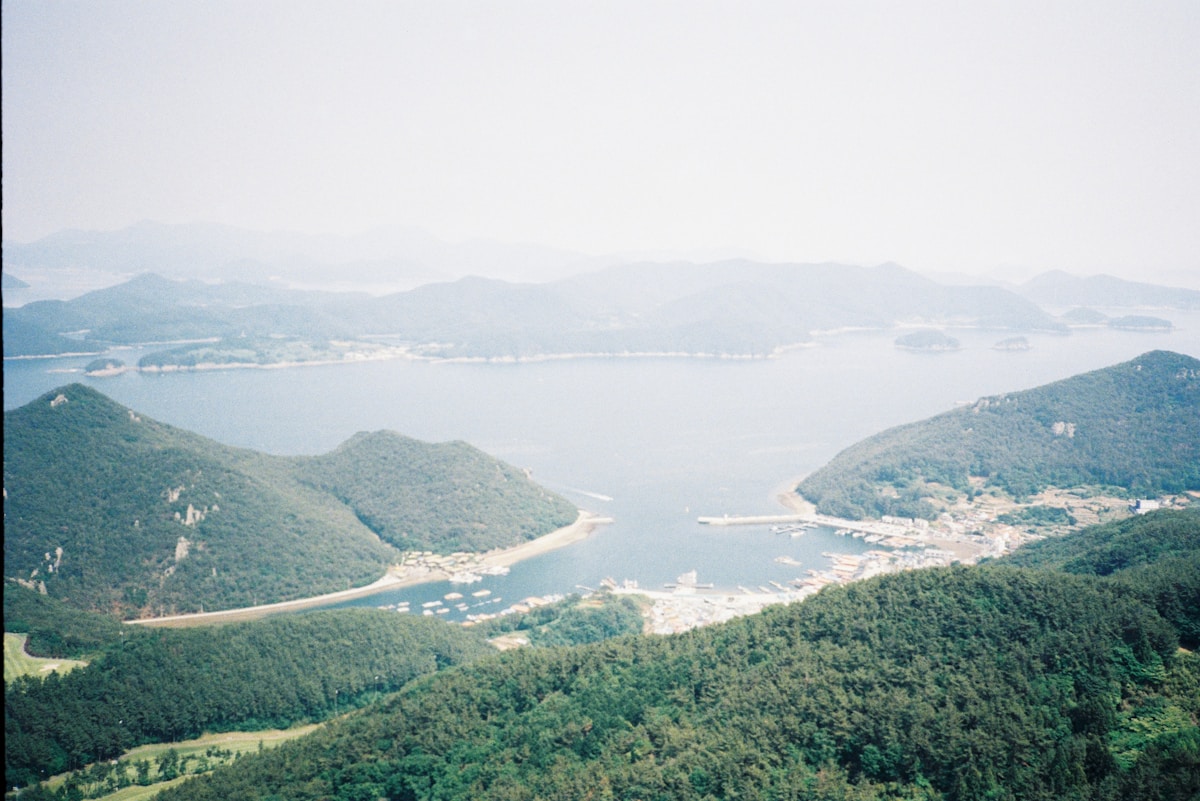
Yeosu Travel Guide
Island ferries, fresh seafood at Yeosu's night market, and a cable car over the bay - Korea's most scenic south coast, with easy Odongdo access.
Guides for Yeosu
Yeosu sits on a peninsula jutting into the Korea Strait, surrounded by more than 300 islands scattered across a sheltered sea. It is a working port city - fishing boats leave before dawn and return to the Seoho Wet Market by morning - and it has a night-market culture built on piers over the water that is unlike anything else in South Korea.
International visitors often discover Yeosu by way of the 2012 World Expo, which was held here and left behind a refurbished waterfront and a cable car system as its main legacy. But the city was compelling long before that, and the parts that matter most - the island ferries, the raw crab restaurants, the sunrise view from Hyangiram Hermitage - had nothing to do with the Expo.
What to Do in Yeosu
Odongdo Island (오동도)
Odongdo is Yeosu’s most visited site: a small wooded island connected to the mainland by a 768-metre stone breakwater. You can walk the breakwater in around 10–15 minutes, or take a small narrow-gauge rail cart (approximately KRW 1,500 each way as of 2026). The island is covered in camellia trees that bloom in January and February, which is when it draws the largest domestic crowds.
A lighthouse at the far end of the island overlooks the harbour entrance. The circuit of the island’s walking paths takes around 45 minutes and includes views back across the city waterfront. Entry to the island is free; the cart is optional.
Hyangiram Hermitage (향일암)
Hyangiram is a Buddhist hermitage clinging to the granite cliffs at the southern tip of Dolsan Island, about 30 minutes’ drive from central Yeosu. It faces southeast across the Korea Strait, positioned to catch the first light of sunrise - hence the name, which translates roughly as “hermitage facing the sun.”
The approach involves climbing a set of steep stone stairs cut into the cliff face, passing through narrow rock crevices. The site feels genuinely dramatic in a way that many of Korea’s mountain temples do not. Entry costs approximately KRW 2,000 (as of 2026). Sunrise visits require very early arrival - get there at least 30 minutes before first light.
Taxis from central Yeosu to Hyangiram cost approximately KRW 15,000–18,000. The journey by city bus takes around 50 minutes.
The Waterfront Night Market (낭만포차 거리)
The Yeosu night market is one of the most photographed scenes in the city for good reason. Pojangmacha stalls built on wooden decks extend over the water along the harbour front, lit by lanterns and rope lighting after dark. The stalls serve grilled seafood (oysters, clams, prawns, and octopus), pajeon pancakes, tteokbokki, and Korean fried chicken, all accompanied by soju or beer.
The market runs from approximately 17:00 to midnight, seven days a week. Prices for seafood grills range from KRW 10,000 to 20,000 per serving; a full evening for two people with drinks costs approximately KRW 40,000–70,000.
This stretch of waterfront is also busy during the day, with a regular walking path, a cable car terminal, and the 2012 Expo legacy buildings a short walk away.
Yeosu Cable Car (여수 해상케이블카)
The cable car connects the old harbour near Odongdo to Dolsan Island, crossing the water at a height of about 60 metres. The journey takes around 15 minutes and offers good views of the island-dotted sea and the city.
- One-way ticket: approximately KRW 13,000 (crystal cabin), KRW 11,000 (standard cabin) (as of 2026)
- Return ticket: approximately KRW 18,000 / KRW 16,000
- Operating hours: 09:30–22:00, with later closing on weekends and summer
Geomundo and Baekdo Islands
Geomundo (거문도) is a three-island cluster about 115 kilometres south of Yeosu, accessible by ferry from Yeosu Coastal Ferry Terminal in approximately 2 hours 30 minutes. Ferries run twice daily in each direction during summer; reduced frequency in winter. The one-way fare is approximately KRW 25,000 (as of 2026).
Geomundo is known for clean beaches, rock formations, and a historical oddity: a small cemetery containing the graves of British Royal Navy sailors who occupied the island from 1885 to 1887 (the “Port Hamilton Incident”). It rewards an overnight stay rather than a rushed day trip - several guesthouses operate on the main island at approximately KRW 40,000–70,000 per room.
Baekdo (백도) is an uninhabited cluster of dramatic sea stacks and rock arches that cannot be landed on but can be circumnavigated by boat. Day cruises depart from Yeosu Coastal Ferry Terminal at approximately KRW 30,000–40,000 per person, typically combining Baekdo with a pass by Geomundo.
Food and Markets
Seoho Wet Market (서호시장)
The Seoho Wet Market is where the fishing boats unload and where Yeosu’s raw seafood culture is most visible. Morning is the best time - boats return between 04:00 and 08:00, and the catch is on display by 07:00. Upstairs from the market stalls, small restaurants serve that morning’s catch as hoe (Korean-style raw fish sashimi), seafood stews, and haemul pajeon.
A raw seafood platter (모둠회, modumhoe) for two people costs approximately KRW 30,000–50,000, depending on the catch and the season.
Dolsan Gat Kimchi (돌산갓김치)
Yeosu’s culinary signature is dolsan gat kimchi - kimchi made from mustard leaf (갓, gat) grown on Dolsan Island rather than the standard baechu (napa cabbage). The leaves give a distinctive peppery flavour. It is sold at markets and is often served as one of the banchan at local restaurants.
Gejang (게장)
Gejang - raw crab marinated in either seasoned soy sauce (간장게장) or chilli paste (양념게장) - is eaten throughout Korea but is particularly associated with the southern Jeolla coast. Several restaurants near the harbour specialise in it. A full gejang meal for two costs approximately KRW 40,000–60,000.
Getting Around Yeosu
The central waterfront, Odongdo, and the Expo site are all within comfortable walking distance of Yeosu Expo Station. City buses connect the station to Dolsan Island and to the ferry terminal (Bus 111 runs to the terminal in around 10 minutes).
Taxis are the most practical option for Hyangiram. Kakao T (카카오T) works well in Yeosu for on-demand taxi booking.
The cable car provides a scenic crossing to Dolsan Island but is not the most practical transport option - it deposits you at a hilltop, not the island’s town centre.
Where to Stay in Yeosu
For accommodation options across all budgets, see our Yeosu hotels guide.
When to Visit Yeosu
Spring (April–May): Best weather for island hopping, comfortable temperatures, and the sea is at its calmest before typhoon season.
Summer (July–August): Peak domestic tourism season; the waterfront is lively but accommodation is expensive and crowded. Excellent for seafood and late-night market culture.
Autumn (September–October): Good weather, reduced crowds after the school holiday period, clear visibility for island boat trips.
Winter: Cold but quiet. Odongdo camellia season (January–February) brings large domestic crowds to that specific site.
Explore Yeosu in Detail
- Things to do in Yeosu - Odongdo Island, Hyangiram Hermitage, Dolsan Bridge views, and the night market waterfront with entry fees
- Where to stay in Yeosu - harbour front, Dolsan Island, and budget guesthouses near the station
For guided boat tours and island-hopping excursions from Yeosu, several operators run day trips to the Hallyeohaesang National Marine Park islands. Travelling the south coast? Pair Yeosu with Gwangju - the two cities are 90 minutes apart by KTX and complement each other well as a culture-and-coast combination.
Upcoming Events in Yeosu
Seollal - Korean Lunar New Year 2027
Seollal 2027, 29 to 31 January. South Korea's Lunar New Year. Families gather for ancestral rites and tteokguk soup over a 3-day public holiday.
Frequently Asked Questions
- Is Yeosu worth visiting?
- Yeosu is one of the most distinctive coastal cities in South Korea. The combination of a working fishing port, floating night market, island-hopping access, and some of the country's best raw seafood makes it a meaningful contrast to Seoul or Busan. It is especially recommended in spring and early summer when the sea is calm and the landscape is green.
- How do I get to Yeosu from Seoul?
- KTX trains run from Seoul Station to Yeosu Expo Station in approximately 2 hours 50 minutes to 3 hours. Tickets cost approximately KRW 48,000–58,000 (as of 2026). Express buses from Seoul's Nambu Bus Terminal take around 4 hours 30 minutes. Yeosu is also accessible by domestic flight from Gimpo Airport (approximately 1 hour), with Air Seoul and other budget carriers operating the route.
- What is the Yeosu night market?
- The Yeosu Waterfront Night Market (여수 낭만포차 거리) is a string of open-air pojangmacha (street stalls) stretching along the waterfront near the old harbour. It operates from approximately 17:00 to midnight and is one of the most atmospheric evening eating experiences in South Korea - the stalls are built on decks that extend over the water. Grilled seafood, pajeon (Korean pancake), and soju are the staples.
- Which islands can I visit from Yeosu?
- Odongdo Island is connected to the mainland by a 768-metre breakwater and is walkable. Dolsan Island is linked by the Dolsan Bridge and is home to Dolsan Park and Hyangiram Hermitage. Geomundo Island (거문도) is the most dramatic day trip or overnight - a 2 hour 30 minute ferry from Yeosu Port, it has beaches, dramatic rock formations, and a 19th-century British naval cemetery. Baekdo Island (백도), a protected uninhabited island group, can be visited on cruise boats from Yeosu.
- What seafood should I eat in Yeosu?
- Yeosu's signature dishes include gejang (raw crab marinated in soy sauce or chilli), haemul pajeon (seafood pancake), and jeon varieties made with fresh octopus and squid. Dolsan gat kimchi - made from local mustard leaf - is another local staple. The Seoho Wet Market and the area around the old ferry terminal are the main addresses for fresh raw seafood restaurants.
Book an experience
Top experiences in Yeosu
Explore the best tours and activities in Yeosu, with instant confirmation and free cancellation on most bookings.