Where to Stay in Daegu: Best Areas for Every Budget
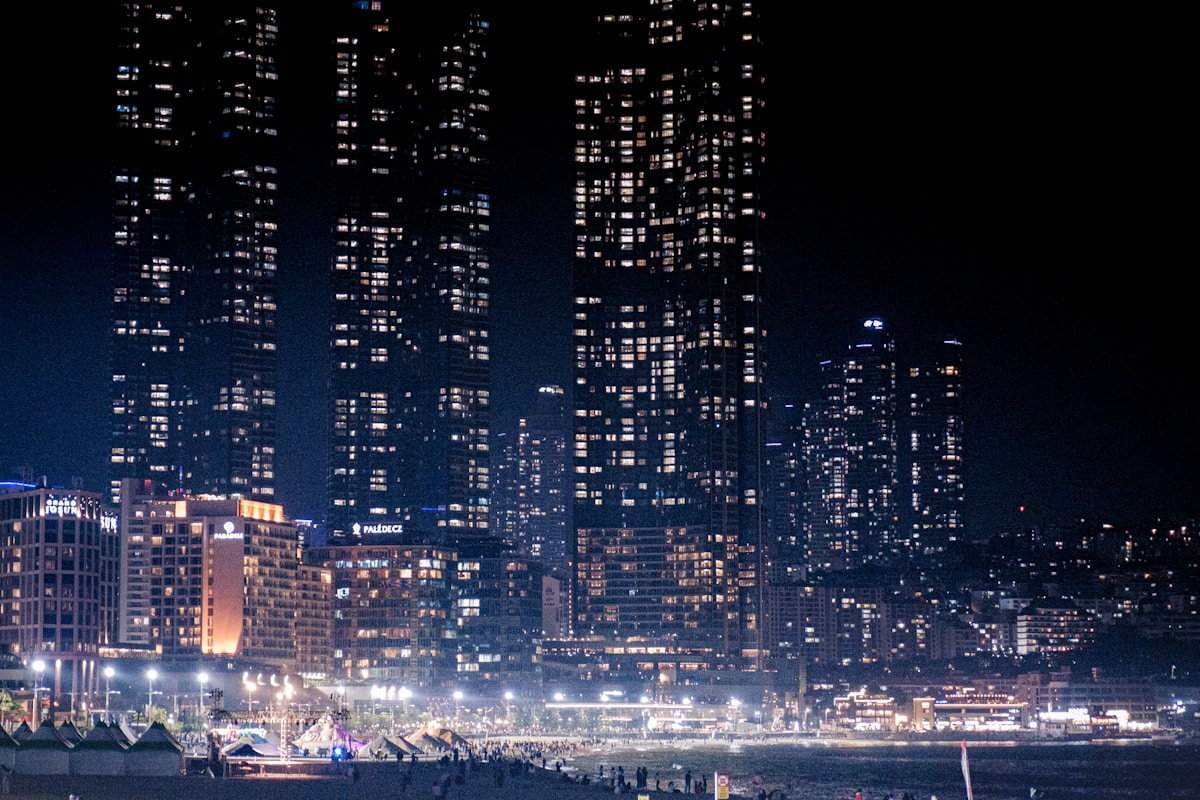
Daegu’s accommodation is spread across several distinct districts, each with a different character. Unlike Seoul, which has a complex patchwork of neighbourhoods, Daegu’s options cluster into three main areas: the central entertainment district around Dongseongno, the upscale residential and hotel area around Suseong Lake, and the budget-friendly streets near Seomun Market. Here is what each offers.
Dongseongno (City Centre)
Dongseongno is the commercial and entertainment heart of Daegu — a pedestrianised street and surrounding district packed with cafes, restaurants, bars, street food stalls, and chain stores. It functions as Daegu’s version of Seoul’s Myeongdong: dense, lively, and oriented around consumption and socialising.
For sightseeing purposes, Dongseongno is the most practical base. The Yangnyeongsi herb market is a 15-minute walk. Daegu Station (Metro Lines 1 and 3) is close by, giving metro access to Seomun Market and buses to Palgongsan. The modern history district is walkable.
Accommodation in Dongseongno covers a wide range: budget motels and guesthouses from KRW 40,000–70,000 per night, mid-range business hotels at KRW 100,000–150,000, and a small number of better-appointed hotels at KRW 150,000–200,000. The area is loud in the evenings — rooms facing the main street may be noisy past midnight.
The metro network connects Dongseongno to all parts of the city, making it effective even for sights that require bus connections.
Suseong Lake Area
Suseong-gu is Daegu’s most affluent district, built around Suseong Lake — a large artificial reservoir with a waterfront restaurant row, walking paths, and an outdoor performance stage. The area has a calmer, more residential atmosphere than the city centre and attracts Daegu’s higher-income demographic.
The Daegu Art Museum is in Suseong-gu (Metro Line 2, Daegu Art Museum Station). Beyond that, most of the main sights require a metro or taxi ride of 20–30 minutes.
Hotels near Suseong Lake tend toward the higher end: Hotel Riviera Suseong (KRW 180,000+ per night as of 2026) is the most well-known upscale option, with lake views and a well-regarded restaurant. Mid-range options in the area run KRW 120,000–160,000.
Suseong Lake suits visitors who want a quieter base, are visiting primarily for the art museum and food scene, or find the noise and pace of Dongseongno unappealing.
Near Seomun Market
The streets around Seomun Market in the Seo-gu district are among the most affordable for accommodation in the city. The area is less glamorous than Dongseongno but more authentic — this is a working commercial district centred on one of Korea’s great traditional markets.
Small guesthouses and budget motels in this area run KRW 35,000–65,000 per night for a basic double room as of 2026. Facilities are minimal but generally clean. The market itself provides excellent low-cost food.
The main limitation is metro access to the rest of the city. Metro Line 2 serves the area (Naesi Station), but the network in this part of Daegu is less extensive than around the central hub. Taxis are cheap and widely available.
This area suits travellers on a tight budget who want to spend time at the market itself and are comfortable with a short metro or taxi ride to reach other sights.
Near Daegu Station (Central Option)
The streets around Daegu Station (served by Metro Lines 1 and 3, and by KTX high-speed rail) have a concentration of business hotels and smaller guesthouses that are practical for arrivals by train. The Yangnyeongsi herb market is a short walk from the station, and the pedestrian connection toward Dongseongno takes about 20 minutes on foot.
Hotel prices near the station run KRW 60,000–120,000 for mid-range options. This is a slightly gritty commercial area without much scenic character, but the transport connections are excellent — both for arriving into the city and for day trips to Palgongsan or surrounding areas.
Practical Comparison
| Area | Best For | Price Range (per night) |
|---|---|---|
| Dongseongno | Sightseeing, nightlife, convenience | KRW 40,000–200,000 |
| Suseong Lake | Upscale calm, art museum | KRW 120,000–200,000+ |
| Seomun Market | Budget, market access | KRW 35,000–70,000 |
| Daegu Station | Transit arrivals, herb market | KRW 60,000–130,000 |
Getting Between Areas
Daegu’s metro has two main lines. Line 1 runs roughly north–south and connects Daegu Station with the central area. Line 2 runs roughly east–west and serves Suseong-gu including the art museum and lake area. A single metro journey costs KRW 1,400–1,600 as of 2026 (tap with T-money card, available at all station vending machines for KRW 2,500).
Taxis are cheap and easy to find — a cross-city trip from Dongseongno to Suseong Lake costs approximately KRW 7,000–10,000. Kakao Taxi (Korea’s Uber equivalent) works well in Daegu and is more reliable for non-Korean speakers than flagging down a street taxi.
The city is also bike-friendly in the river park areas connecting the central districts. A public bicycle hire system (DRT) operates from docking stations near major metro stops at KRW 1,000 per hour.
What to Expect at Each Price Point
Under KRW 60,000: You are looking at family-run motels (yeogwan) or small guesthouses, mostly near Seomun Market and Daegu Station. Rooms are typically small but clean, with en-suite bathrooms. Expect Korean-style ondol (heated floor) rooms. Shared kitchen access is common.
KRW 70,000–130,000: The mid-range in Daegu is well-served. Business hotels near the station and Dongseongno offer reliable wi-fi, private bathrooms, and some English-language signage. This tier represents the best value for most visitors.
KRW 130,000–200,000: Upper mid-range options concentrate around Suseong Lake and include the Hotel Riviera Suseong and similar properties. These have restaurant facilities, fitness centres, and organised parking — worth considering if you are arriving by car.
Over KRW 200,000: Daegu has limited true luxury hotel stock compared to Seoul. The InterBurgo and a small number of business-class hotels occupy this tier. For most visits, the upper mid-range offers excellent value without the gap you might expect.
Booking Tips
Daegu sees steady domestic Korean tourism year-round, with peak periods during the Daegu Colorful Festival in May and the Chicken & Beer Festival in July (the city has the highest concentration of chicken restaurants per capita in Korea). Book accommodation two to three weeks ahead for these periods. Outside of festival dates, same-week bookings are generally possible.
Most hotels in Daegu can be booked via Korean apps (Yanolja, Goodchoice) at lower prices than international platforms. These accept international cards. Alternatively, Booking.com and Agoda have solid coverage of the mid-range and above.
For specific hotel recommendations at each price point, see our best hotels in Daegu guide. For attractions and what to see, read our Daegu things to do guide.
Book an experience
Top-rated experiences in Daegu Travel Guide
The highest-rated tours and activities in Daegu Travel Guide. Book today, cancel free if plans change.
Frequently Asked Questions
- What is the best area to stay in Daegu for sightseeing?
- Dongseongno in the city centre puts you within walking distance of the Yangnyeongsi herb market and the modern history district, with excellent metro connections to Seomun Market and buses to Palgongsan. It is the most practical base for first-time visitors.
- Is Suseong Lake worth staying near for a short visit?
- Suseong Lake is pleasant but slightly removed from the main sights. It suits visitors who prioritise a quieter, more upscale environment over proximity to the historic centre. Budget 20–30 minutes by metro or taxi to reach Dongseongno and the main attractions.
- Is Daegu more expensive or cheaper to stay in than Seoul or Busan?
- Daegu is generally cheaper than Seoul and roughly comparable to Busan. Budget guesthouses near the subway run KRW 40,000–70,000 per night; mid-range hotels KRW 100,000–180,000. The city has fewer international luxury properties than Seoul.
Sorted your stay?
Here's how to get there — and get around once you arrive.
Airport Transfer
Fixed-price airport pickup to Daegu Travel Guide — driver meets you at arrivals, no haggling.
Book a Transfer →We may earn a small commission — at no extra cost to you.