Daegu is South Korea’s fourth-largest metropolitan area and has a reputation among Koreans primarily for two things: its intense summer heat and its distinctive local food. Visitors who take the time to explore find more than that - dramatic mountain hiking, a well-preserved traditional medicine district, one of Korea’s great traditional markets, and a modern art museum that holds its own against Seoul’s equivalents.
Here is a practical guide to the top things to do in Daegu with entry fees current as of 2026.
Gatbawi Buddha (Palgongsan)
Gatbawi is arguably the single most memorable sight in the Daegu region. The statue is carved in relief from a natural granite rock face near the summit of Palgongsan mountain, with a distinctive flat stone sitting on its head like a hat - the Korean word gat refers to this traditional flat-brimmed headgear. The figure dates to the late Unified Silla period (around 863 CE).
Entry to the Gatbawi site is free. The hike from the main trailhead takes approximately 60–90 minutes each way on a rocky trail with significant elevation change. The effort is part of what makes the arrival at the top feel earned - and on clear days the view over the Daegu basin stretching to the mountains beyond is excellent.
Buses from Daegu reach the Palgongsan area in about 40–50 minutes. The mountain also has a cable car operating in the Donghwa area (separate location from Gatbawi, KRW 8,500 return as of 2026), offering a less strenuous way to access mountain views.
Seomun Market
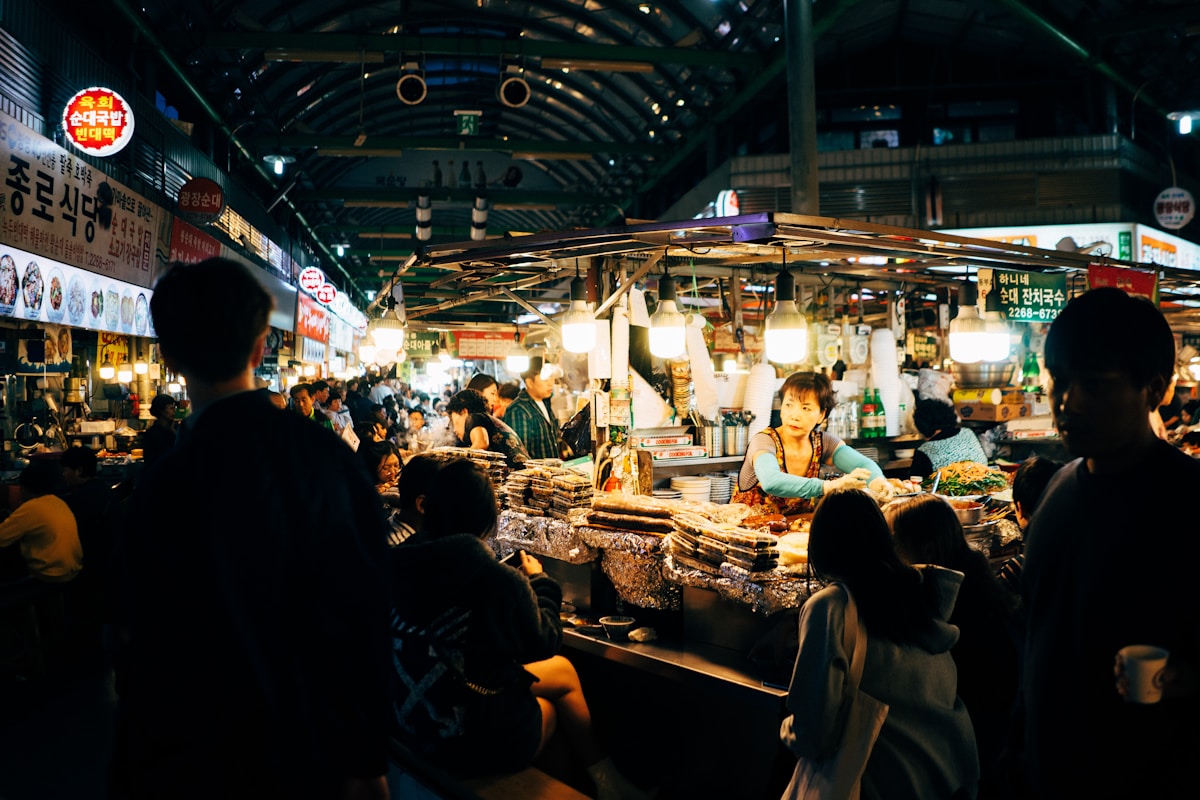
Seomun Market is one of the three largest traditional markets in Korea, with a history stretching back over 400 years. The covered market complex occupies a large area in the western part of central Daegu and operates daily except Sundays (some sections have varying closing days - check locally).
The market has distinct zones: textiles and clothing make up a significant proportion of the stalls, reflecting Daegu’s historical role as a centre of the Korean textile industry. The food sections in the interior sell tteokbokki, sundae (blood sausage), hotteok, grilled skewers, and various Daegu-specific dishes. A full meal of street food costs KRW 5,000–10,000.
The market is accessible by Metro Line 2 (Naesi or Sinnam stations) and by bus. Allow at least 1–2 hours to walk through the main sections.
Yangnyeongsi Oriental Medicine Market
Yangnyeongsi is a 350-year-old traditional medicine and herb market occupying several streets in the Jung-gu area near Daegu Station. The market was originally established to supply Korean medicinal herbs throughout the peninsula and remains one of the country’s largest traditional medicine wholesale markets today.
UNESCO has recognised Yangnyeongsi as an intangible cultural heritage. The streets are lined with shops selling hundreds of varieties of dried herbs, roots, bark, and prepared medicines. The smell - earthy, spiced, slightly medicinal - is distinctive and not unpleasant.
The Yangnyeongsi Museum of Oriental Medicine at the edge of the market charges KRW 1,000 for adults and provides background on the history of Korean traditional medicine (hanbang) and the market. The museum is open Tuesday to Sunday, 09:00 to 18:00.
Donghaksa Valley and Palgongsan
Beyond Gatbawi, Palgongsan provincial park offers extensive hiking trails through forested valleys and along rocky ridgelines. The Donghaksa Valley area on the western slopes has gentler walking paths through woodland, stream crossings, and several small Buddhist temples.
The park is free to enter (small parking fee applies for cars). Trail difficulty ranges from easy riverside walks to full-day ridge traverses. The Donghaksa area is most beautiful in late April when spring cherry blossoms line the valley, and in mid-October when the deciduous forest turns.
Buses from downtown Daegu reach the park in 40–60 minutes depending on the trailhead.
Daegu Modern History and Culture Street
The area around the former Daegu Police Administration Building and nearby streets preserves a concentration of Japanese colonial-era architecture from the early 20th century, now repurposed as cafes, galleries, and cultural spaces. The neighbourhood is sometimes called Daegu’s “modern history district.”
The Daegu Modern History Museum (housed in a restored 1932 building, formerly a Japanese colonial bank) charges KRW 500 for adults and covers the city’s history through the colonial period, the Korean War, and post-war reconstruction. It is small but well presented.
Duryu Park
Duryu Park in the Dalseo district is Daegu’s largest urban park, with a small amusement park (family-oriented, ride prices from KRW 1,000–5,000), an outdoor swimming pool open in summer, walking trails, and open lawns. Entry to the park is free.
The park is primarily used by local families and is not a major tourist attraction, but it offers a pleasant break from the city streets and a window into everyday Daegu leisure. Accessible by Metro Line 1 (Duryu Station).
Book guided tours and activities in Daegu through GetYourGuide.
Pick up an eSIM for South Korea through Airalo to stay connected.
Daegu Art Museum
The Daegu Art Museum in Suseong-gu opened in 2011 and focuses on modern and contemporary Korean and international art. The permanent collection emphasises post-Korean War Korean art, with rotating exhibitions that are typically of a high standard.
Admission to the main collection is KRW 1,000 for adults as of 2026; some temporary exhibitions have separate ticketing. The museum is open Tuesday to Sunday, 10:00 to 19:00. It is accessible by Metro Line 2 (Daegu Art Museum Station).
For where to sleep while you explore, see our Daegu where to stay guide. For the full city overview, visit the Daegu travel guide.