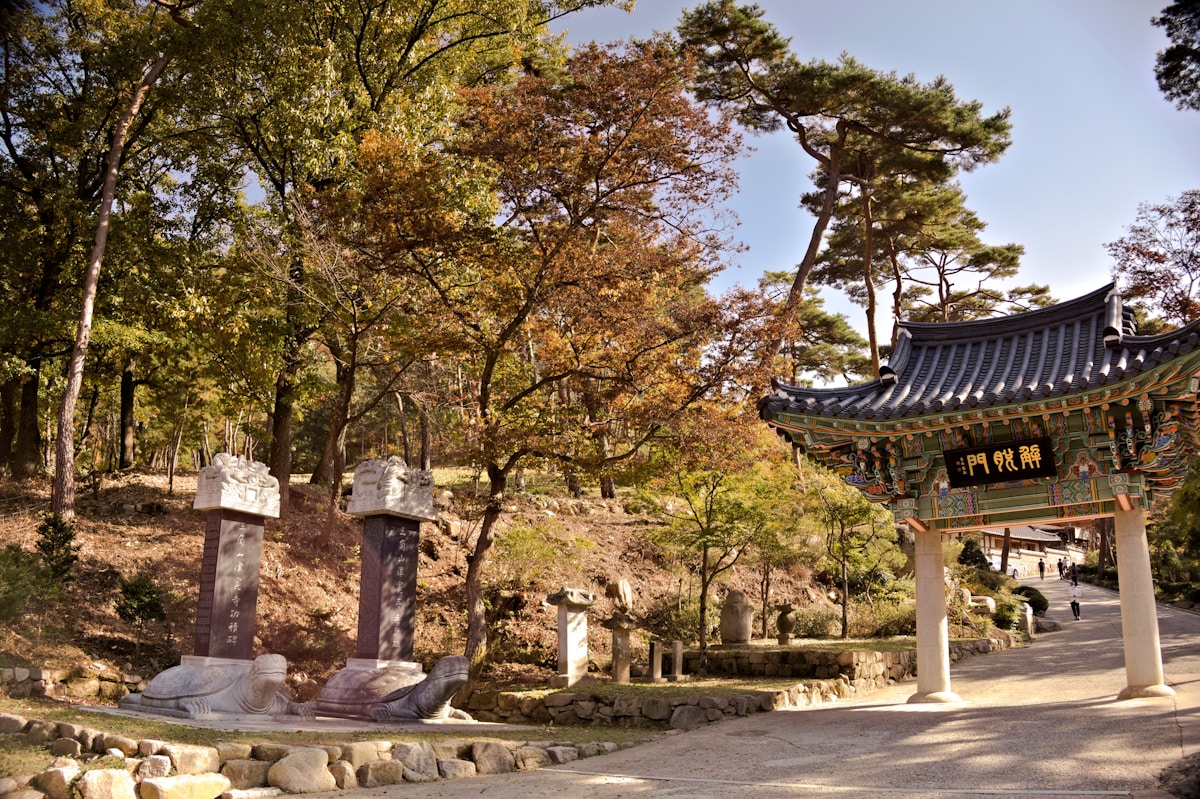
Andong sits in North Gyeongsang Province and holds one of the densest concentrations of Joseon-era heritage in South Korea. The city is less visited than Gyeongju but arguably has more living traditional culture - folk villages still inhabited by descendant families, a tradition of aristocratic Confucian learning, and a mask dance festival that draws tens of thousands annually. Here is what to do in Andong with entry fees and transport details current as of 2026.
Hahoe Folk Village
Hahoe Folk Village (하회마을) is a UNESCO World Heritage Site and the centrepiece of any visit to Andong. It is a working village of approximately 230 households, occupied by descendants of the Ryu clan since the early Joseon period. Traditional thatched and tile-roofed houses line unpaved lanes, and the village sits in a dramatic horseshoe bend of the Nakdong River with forested hills on three sides.
Entry to the village costs approximately KRW 4,000 for adults and KRW 2,000 for children as of 2026. The village is open daily from 09:00 to 18:00 (last entry 17:30). A separate ferry ride to the Buyongdae cliff viewpoint on the opposite riverbank costs approximately KRW 2,000 return and gives the best panoramic views of the village and its river setting.
Hahoe is best experienced on weekdays in the early morning before tour buses arrive around 10:00. The traditional mask dance (Hahoe Byeolsingut Talnori) is performed free of charge most Saturdays and Sundays at 14:00 from May through October.
Andong Mask Museum (하회세계탈박물관)
The Hahoe World Mask Museum sits just outside the entrance to Hahoe Folk Village and displays mask traditions from across South Korea and from over 30 countries. The collection includes the famous Hahoe tal (masks carved from alder wood) which date from the Goryeo period and are among Korea’s most recognised cultural artefacts.
Entry costs approximately KRW 2,000 for adults as of 2026. The museum is open Tuesday to Sunday from 09:30 to 18:00 (closed Mondays). Signage is in Korean and English.
Dosan Seowon Confucian Academy
Dosan Seowon is a 16th-century Confucian academy founded in honour of Yi Hwang (pen name Toegye), one of Korea’s most influential Confucian scholars and the figure depicted on the KRW 1,000 banknote. The academy sits on a forested hillside overlooking a reservoir about 25 km north of central Andong, and the setting is as significant as the buildings themselves.
Entry costs approximately KRW 1,500 for adults as of 2026. Opening hours are 09:00 to 18:00 daily (17:00 in winter months). City bus 67 runs from Andong Bus Terminal to Dosan Seowon and takes approximately 50 minutes.
The academy complex includes lecture halls, dormitories, the Yejeon shrine, and Toegyejeong pavilion overlooking the water. A small traditional market is held once a month on the riverbank nearby, though schedule varies.
Bongjeongsa Temple
Bongjeongsa (봉정사) is a Buddhist temple in the Sobaek Mountains north of Andong and is widely considered to contain the oldest surviving wooden building in Korea - the Geungnakjeon hall, dating to the Goryeo period. The temple complex sits in a valley surrounded by forested ridges and is less crowded than the major temples in Gyeongju or Busan.
Entry costs approximately KRW 1,500 for adults as of 2026. The temple is open daily from 07:00 to 20:00. The approach road is narrow - if driving, a car park is available at the trailhead, and a 15-minute uphill walk follows.
Bongjeongsa and Dosan Seowon can be combined in a single day trip from Andong city by taxi if timing is planned carefully.
Andong Dam and Woryeonggyo Bridge
The Andong Dam (안동댐) created a large reservoir that now dominates the landscape north of the city. The Woryeonggyo Bridge, a traditional pedestrian bridge approximately 387 m long, spans the reservoir and is the longest traditional-style wooden bridge in South Korea. It is particularly atmospheric at dusk.
Access to the bridge is free. A walking path connects the bridge to a small park with traditional boat replica displays and information panels about the area’s pre-dam history. The bridge is accessible by taxi from central Andong in approximately 15 minutes (approximately KRW 8,000–10,000 as of 2026).
Andong Jjimdak Alley (찜닭골목)
In the centre of Andong, a short alley near the old market area is lined with jjimdak restaurants - braised chicken with glass noodles, soy sauce, vegetables, and gochujang. This is Andong’s signature dish and the alley where it originated. Most restaurants serve shared portions (large enough for two to three people) for approximately KRW 25,000–35,000 as of 2026.
The alley is a five-minute walk from Andong Station and is busiest at lunch from 11:30 to 14:00. No reservations are needed; most restaurants have street-facing counters and straightforward menus.
For guided cultural tours in Andong covering Hahoe Folk Village, Dosan Seowon, and the mask dance festival with English-speaking guides, advance booking through GetYourGuide is recommended - especially during the Andong Mask Dance Festival in late September and early October when demand is highest.