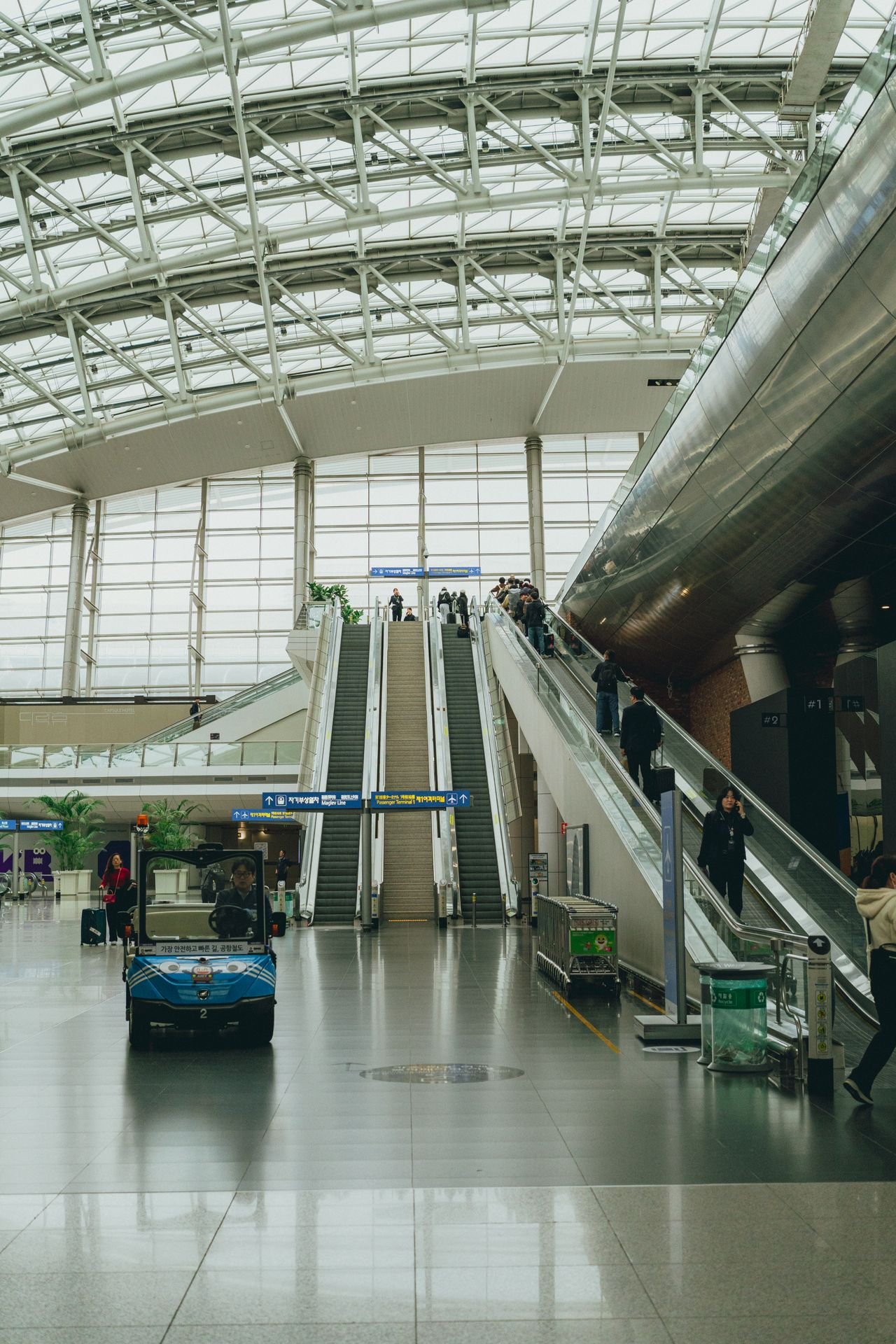
Incheon is one of the easiest hubs in Asia to connect through, and a long wait here does not have to be spent on an airport bench. With 4 to 5 hours you can join a free guided tour, with 7 or more you can reach central Seoul by train, and with less you can sleep, shower and eat well without leaving the terminal. This guide covers all three routes and how to pick between them.
Pick your plan by hours on the ground
Count from the moment you land to the moment you must be back at security, not to your departure time. Allow immigration on the way out (20 to 60 minutes at busy times) and a buffer of 2 hours before an international flight.
| Usable hours | Best option |
|---|---|
| Under 3 | Stay airside: eat, shower, rest |
| 3-5 | Short KTO tour near the airport, or a capsule room |
| 5-8 | Longer KTO tour, or a short AREX trip to Hongdae |
| 8+ | DIY Seoul: palaces, markets, a proper meal |
| 24+ | Treat it as a stopover and book a hotel in Seoul |
Free KTO transit tours
The Korea Tourism Organization offers free guided transit tours from both terminals for passengers connecting to an onward flight. Based on the programme as listed by Visit Korea and travel sites in 2026, the nine routes run from roughly 1 hour to 5 hours:
- 1 hour: the Paradise City art-and-entertainment complex, and Yonggungsa Temple.
- 2 to 3 hours: Heungryunsa Temple with the Incheon Grand Bridge and memorial hall, and an Incheon city route.
- 4 hours: Hongdae street in Seoul, usually an afternoon departure.
- 5 hours: Gyeongbokgung Palace with Insa-dong, plus longer DMZ and Imjingak style routes.
Treat those times as a guide only. Routes, departure hours and even whether a given tour runs on a given day change, and at least one traveller listing has reported the programme paused at times. Check the transit tour desk in the arrivals hall, or the official Incheon Airport and Visit Korea sites, before you plan around a specific route.
How it works in practice:
- Land, clear immigration and go straight to the transit tour desk. Do not wait: the desk sits outside immigration and the queue can take time.
- Register in person with your passport and your onward boarding pass. Places are first-come, first-served, so busy days fill.
- Join the group at the meeting point. The guide gets you back to the terminal with time to spare, but you are responsible for your own check-in and security.
Entry rules still apply. Walking out of the airport is an entry into Korea. If your nationality needs a K-ETA or visa, you need it for the tour. Rules have been changing, so read our K-ETA and visa guide before you rely on an exemption.
If a tour is full or does not match your timing, a private Seoul half-day tour is the paid alternative, with your own pickup time.
Sleeping, showering and resting inside the terminals
Terminal 1 and Terminal 2 both have Darakhyu capsule hotels run by Walkerhill, sold in day-use blocks. Reseller listings put day-use capsule rooms at roughly USD 25 to 35 as of 2026, with Terminal 2 usually a little higher. The Terminal 1 transit hotel sits inside the transit zone, which means you do not need to clear immigration, a real advantage if you lack an entry document. Showers and relaxation areas are also available, and the airport has free lounges and rest areas for everyone.
For a longer wait with a proper bed, our Incheon where-to-stay guide compares airport-zone and Songdo options, and our Incheon city guide covers what is worth seeing outside the terminal.
DIY Seoul dash by AREX
If you have 8 hours or more, the train is the fastest route. The AREX Express runs non-stop to Seoul Station in about 43 minutes, and the all-stop train takes about 59 minutes and stops at Hongik University, the best fit for Hongdae. Full times, fares and the last-train details are in our Incheon Airport to Seoul transfer guide.
A realistic 8-hour plan: land, clear immigration (45 min), AREX to Hongik University (about 1 hour), 3 hours in Hongdae, return to the airport (1 hour), and 2 hours for check-in and security. Add margin if it is rush hour, when roads and platforms are busy, and keep your first meal short.
Buy a T-money card at the airport for metro and buses. If you need data, an eSIM for South Korea can be set up before you land.
Luggage storage
Both terminals offer paid baggage storage, with price depending on bag size and duration. Third-party sources suggest roughly KRW 7,000 to 15,000 per bag per day as of 2026, but we could not confirm the official rate, so check the desk. Store your bag before you leave, as you do not want to carry it on a train or a tour.
Quick checklist
- Passport, onward boarding pass and any K-ETA or visa.
- A bag with what you need for the day, the rest in storage.
- Your airline’s check-in close time written down, plus the AREX last-train time if you land late.
- Enough Korean won or a card for transit fares and a meal.
Booking a night instead? Our Seoul city guide is the next stop once you decide to stay longer.