Gyeongju is the former capital of the Silla Kingdom, which ruled most of the Korean peninsula for nearly a thousand years. The city has more UNESCO World Heritage sites than anywhere else in Korea and almost all of them are concentrated in a walkable central area or on a single bus route to the hills east of the city. Whether you are coming from Seoul or Busan, the day trip logic is straightforward: get there early, cover the central sites on foot, then take the bus up to Bulguksa and Seokguram before heading back.
Getting to Gyeongju
From Busan (recommended base for a day trip)
The KTX or SRT from Busan Station takes 35-50 minutes to Singyeongju Station. Trains run roughly every 30-45 minutes throughout the day. The fare is approximately KRW 13,000-18,000 each way in standard class as of 2026. From Singyeongju Station, take bus 700 or 700-1 to central Gyeongju (approximately KRW 1,400, 25 minutes) or a taxi (approximately KRW 12,000-15,000).
The older Gyeongju Station, in the city centre, is served by slower Mugunghwa trains from Busan Station — journey time is around 1 hour 10 minutes, and the fare is approximately KRW 5,800. If you are heading straight to central Gyeongju without visiting Bulguksa first, this is a convenient option since Gyeongju Station is walkable to the main sites.
From Seoul
The SRT from Suseo (Gangnam) station is the fastest option: approximately 1 hour 50 minutes to Singyeongju Station, costing KRW 35,000-50,000 in standard class as of 2026. The KTX from Seoul Station takes around 2 hours 10 minutes and costs a similar amount. Book in advance through Korail or the SRT app for the best fares.
From Singyeongju Station, take the connecting bus (approximately 25 minutes, KRW 1,400) or taxi to central Gyeongju. For a full day, aim to board the first or second train of the day — departures from Seoul start around 05:30-06:00. This gives you 7-8 hours in Gyeongju before catching a late-afternoon train back.
Morning: The Central Heritage Zone
Start in central Gyeongju, which packs most of the major Silla-era monuments into a compact area you can walk in 2-3 hours.
Daereungwon Tumuli Park (Royal Tombs)
The most visually distinctive sight in Gyeongju: a walled park containing 23 large circular burial mounds built for Silla royalty, primarily between the 4th and 5th centuries CE. The largest stand over 20 metres high and are grass-covered, giving the city centre an otherworldly, rolling landscape.
- Entry fee: approximately KRW 3,000 for adults (as of 2026)
- Time needed: 45-60 minutes
- Tip: One tomb, Cheonmachong, is open to enter and displays replicas of the excavated artefacts — including the famous Silla gold crown.
Cheomseongdae Observatory
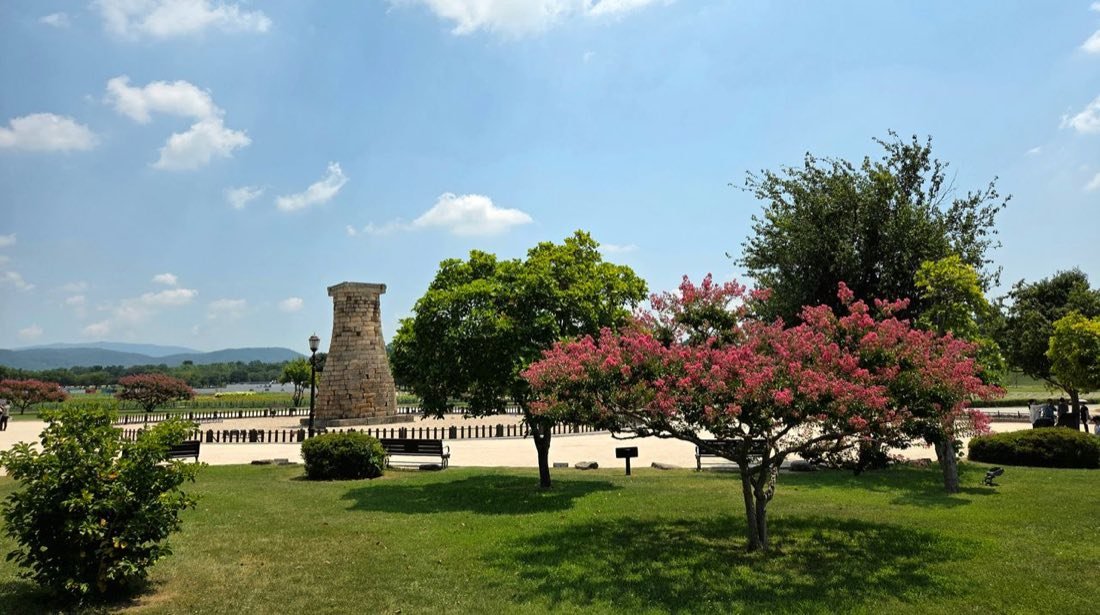
A short walk east of Tumuli Park. Built in 632 CE during the reign of Queen Seondeok, Cheomseongdae is one of the oldest surviving astronomical observatories in Asia. The cylindrical granite structure is 9.4 metres tall and sits in an open field — it looks modest in photographs but is more striking in person when you consider its age.
- Entry: free
- Time needed: 15-20 minutes
Donggung Palace and Wolji Pond (Anapji)
A short walk further east. This 7th-century palace complex is the best sight in Gyeongju at night (the pavilions are illuminated and reflected in the pond), but the daytime visit is still worth including if you are pushing for a single day.
- Entry fee: approximately KRW 3,000 for adults (as of 2026)
- Time needed: 30-45 minutes
- Evening option: If returning to Gyeongju for a meal before the train, the night visit here after Bulguksa is the best use of remaining time.
Lunch
The Tumuli Park area has several restaurants within a 5-minute walk. Gyeongju bread (gyeongju-ppang), a sweet pastry filled with red bean paste, is the city’s most famous food souvenir and sold from small shops near the park entrance — KRW 1,000-1,500 per piece. For a proper meal, sit-down restaurants in the area serve bibimbap and doenjang jjigae (soybean paste stew) for approximately KRW 9,000-13,000 per person.
Afternoon: Bulguksa Temple and Seokguram Grotto
The afternoon is dedicated to the two most important Buddhist sites in Korea, both of which sit in the mountains 16km east of central Gyeongju.
Getting to Bulguksa
Take bus 10 or 11 from Gyeongju Intercity Bus Terminal (walk 5 minutes from Tumuli Park or take a short taxi). Journey time approximately 35-40 minutes; fare approximately KRW 1,400 as of 2026. Taxis from central Gyeongju cost approximately KRW 12,000-15,000.
Bulguksa Temple
A UNESCO World Heritage Site and one of the finest examples of unified Silla Buddhist architecture in Korea. The temple complex was first built in 528 CE and substantially expanded in 751 CE during the reign of King Gyeongdeok. The stone staircases leading to the main gate (Cheongunggyo and Baengunggyo bridges), the two stone pagodas in the main courtyard (Dabotap and Seokgatap), and the multi-tiered wooden halls climbing up the hillside are among the most photographed sights in South Korea.
- Entry fee: approximately KRW 6,000 for adults (as of 2026)
- Opening hours: 07:30-18:00 (April-October); reduced in winter
- Time needed: 1-1.5 hours
Seokguram Grotto
4km up the mountain from Bulguksa, accessed by local bus or taxi. The grotto contains a 3.4-metre seated Buddha sculpted from granite in the 8th century — considered one of the finest examples of Buddhist sculpture in East Asia. The main chamber is enclosed in glass (to protect from humidity), which frustrates some visitors, but the scale and quality of the carving is genuinely exceptional.
- Entry fee: approximately KRW 5,000 for adults (as of 2026), or KRW 10,000 combined with Bulguksa
- Bus from Bulguksa: bus 12 (approximately 15 minutes, KRW 1,400)
- Taxi from Bulguksa: approximately KRW 8,000-10,000 one way
- Time needed: 30-45 minutes
- Note: The bus back from Seokguram to Bulguksa (or directly to Gyeongju) runs infrequently in the evening. Check the timetable before heading up.
Returning
From Bulguksa, take bus 10 or 11 back to Gyeongju Bus Terminal (35-40 minutes). If your train departs from Singyeongju Station, take bus 700 or 700-1 from the terminal or a taxi. The last SRT departures from Singyeongju to Seoul are in the late evening; the last KTX is similar. Check the timetable when booking outbound tickets and give yourself at least 30 minutes from Gyeongju centre to Singyeongju Station.
For Busan, the last KTX from Singyeongju runs past 22:00, which gives generous flexibility. Trains back to Busan from the older Gyeongju Station (Mugunghwa) are also an option if you want to avoid the bus to Singyeongju.
Practical Summary
| Leg | Transport | Time | Approx Cost (2026) |
|---|---|---|---|
| Busan to Singyeongju | KTX/SRT | 35-50 min | KRW 13,000-18,000 |
| Seoul to Singyeongju | SRT | 1h50m | KRW 35,000-50,000 |
| Singyeongju to central Gyeongju | Bus 700 | 25 min | KRW 1,400 |
| Gyeongju to Bulguksa | Bus 10/11 | 35-40 min | KRW 1,400 |
| Bulguksa to Seokguram | Bus 12 | 15 min | KRW 1,400 |
| Tumuli Park entry | On foot | - | KRW 3,000 |
| Bulguksa entry | - | - | KRW 6,000 |
| Seokguram entry | - | - | KRW 5,000 |
For more detail on individual sites, see our things to do in Gyeongju guide. For accommodation if you decide to stay overnight, see our Gyeongju hotels page. For a wider choice of beds, see our where to stay in Gyeongju guide.
Book Your Gyeongju Day
If you would rather not manage buses between sites, a guided Gyeongju day tour covers Bulguksa, Seokguram and the tumuli with transport included. Coming from Busan, browse Busan tours for departures that include Gyeongju. To stay overnight and see the royal tombs lit up after dark, compare Gyeongju hotels, or base yourself in Busan or Seoul and return the same day.
If you are planning around this, 3 Days in Seoul Itinerary, 3 Days in Busan Itinerary and 10 Days South Korea Itinerary are worth reading too.