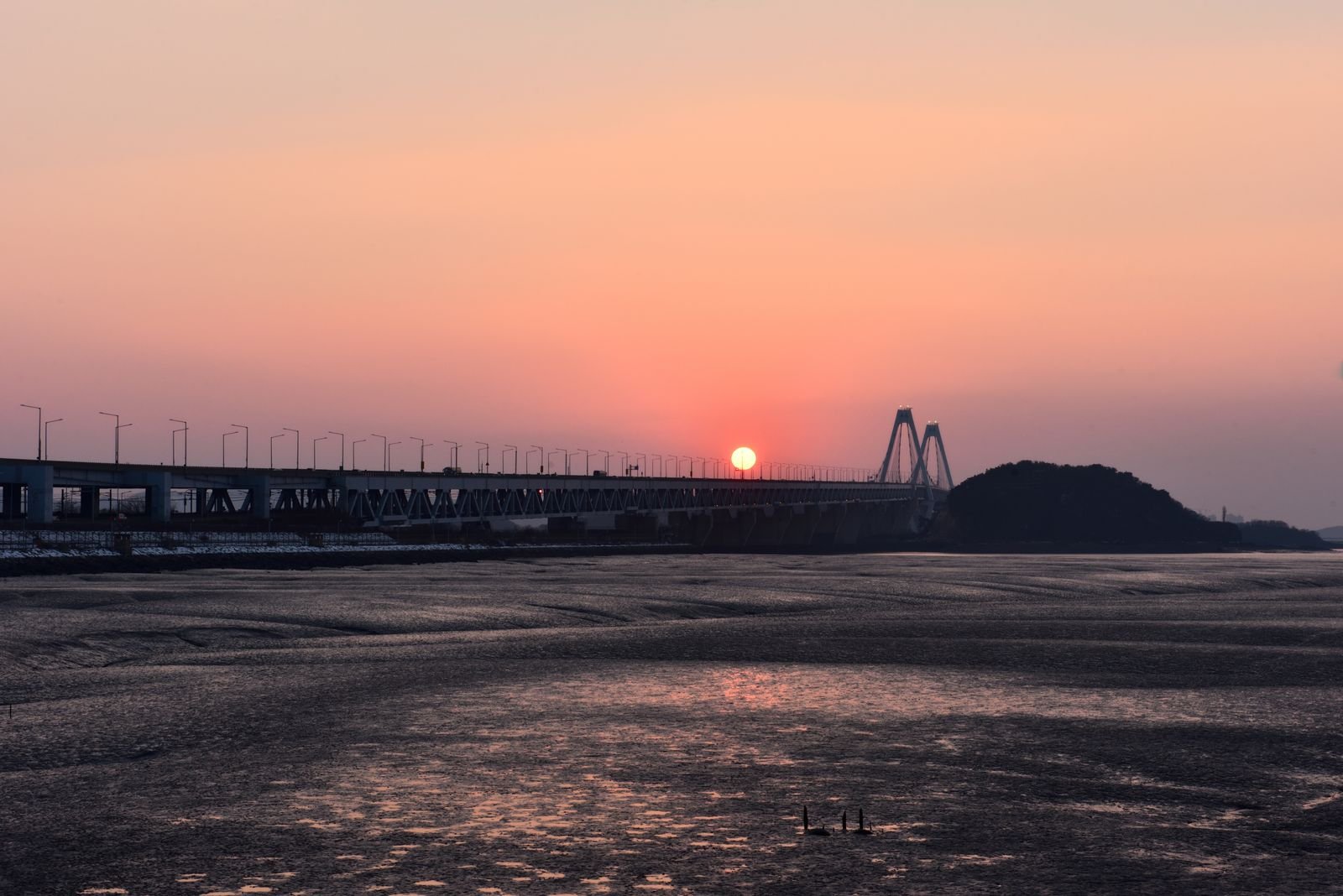
Incheon and Busan are both Korean coastal cities with international airports, but they could not be more different as destinations. Incheon is primarily a gateway - the second-largest airport hub in Asia, a rebuilt port city, and a new planned business district on reclaimed land. Busan is Korea’s second city with an unmistakable identity: beaches, towering coloured villages, the country’s best seafood market, and a warmer climate than Seoul that encourages outdoor living.
Quick Verdict
| Category | Incheon | Busan |
|---|---|---|
| Primary role | Airport gateway, port city | Korea’s second city, destination |
| Beaches | None in the city centre | Haeundae, Gwangalli - excellent |
| Seafood | Good (port town, fresh fish) | World-class (Jagalchi Market) |
| Character | International, business-oriented | Maritime, gritty, culturally distinct |
| Chinatown | Korea’s only Chinatown | No Chinatown |
| Hotels | Near-airport options, business hotels | All ranges including beachfront |
| Best for | Transit layovers, Chinatown lunch, Songdo | Beaches, food, Korean city life |
| From Seoul | 1h AREX / KTX via Seoul Station | 2h 15min KTX |
Incheon as a Destination
Most travellers see Incheon only through the window of the airport, which is a missed opportunity. The city proper - accessible via the AREX airport train to Incheon Station in 42 minutes - has a few genuinely interesting areas.
Incheon Chinatown is the standout attraction. Unlike the largely symbolic Chinatowns in Seoul, Incheon’s Chinatown has genuine depth - it developed from a concession zone established during the Qing Dynasty in 1884 and retains Chinese-Korean architecture, Chinese trading houses, and most significantly, the restaurant that invented jjajangmyeon (black bean noodle sauce) in Korea. The dish - a Koreanisation of the Chinese zhajiangmian - is now a national Korean comfort food. The original restaurant claims to have invented the Korean version, and the neighbourhood’s restaurants are the best place in Korea to eat it (KRW 8,000–12,000 a bowl). Adjacent to Chinatown, the Open Port Culture and Tourism Zone preserves early 20th-century Japanese, American, and European consulate buildings from the treaty port era.
Songdo International Business District is a planned city built on 600 hectares of reclaimed land from Incheon Bay since 2003. It’s deliberately futuristic: a Central Park with gondola boats on an artificial lake, LEED-certified glass towers, and a street grid designed around smart city principles. As a destination it lacks the organic character of an old city, but the Central Park canal (modelled on New York’s Central Park) is pleasant and the area connects to the Jack Nicklaus Golf Club. Songdo is KRW 5,000–7,000 by taxi from the airport.
Ganghwa Island, 40 minutes northwest of Incheon by bus (KRW 2,900), has Bronze Age dolmens (listed UNESCO World Heritage) and the Manisan Altar - a 2,000-year-old stone structure on the island’s highest point where Korea’s legendary founder Dan-gun is said to have held the first sacrifice to heaven. The island also has substantial Goryeo-era fortress ruins and traditional farmhouses.
Busan as a Destination
Busan is Korea’s most distinct city after Seoul. Built at the southern tip of the Korean Peninsula where mountains meet the sea, the city’s topography of steep hillsides, beaches, and fishing ports creates a landscape unlike anything in Seoul.
Haeundae Beach is Korea’s most famous beach - 1.5 km of fine sand with a consistently warm sea (25–28°C in July–August). The surrounding district has Busan’s main luxury hotels (Park Hyatt Busan, Lotte Hotel Busan), rooftop bars looking over the beach, and the Marine City towers illuminated against the water at night. In August, the Busan International Film Festival and peak beach season fill every hotel to capacity.
Gwangalli Beach is the local alternative to Haeundae - narrower, less developed, and with the Gwangan Bridge creating a spectacular backdrop for night photography. The beach is lined with cafés, bars, and Korean BBQ restaurants that run until late; the area has a stronger local crowd than tourist-heavy Haeundae.
Jagalchi Market is one of Asia’s largest seafood markets - a covered market and adjacent outdoor stalls along Busan’s old fishing harbour where fishmongers sell live octopus, flatfish, oysters, abalone, and sea creatures without English names from dawn to evening. The second floor of the main building has restaurants where you buy your fish downstairs and take it up to be cooked as hwe (raw fish slices, the Korean equivalent of sashimi) or grilled. A plate of hwe for two with side dishes runs KRW 30,000–50,000.
Gamcheon Culture Village - a hillside neighbourhood of pastel-coloured houses that was originally a community of impoverished refugees from the Korean War - has been repainted and decorated with art installations, small galleries, and café-studios since a community development project in 2009. It’s self-consciously photogenic and now receives more tourists than residents, but the original hillside architecture and the views over Busan’s industrial port are genuinely impressive.
Accommodation
Incheon accommodation divides between near-airport hotels (for transit stopovers) and downtown options near Incheon Station. Airport-adjacent options include the Grand Hyatt Incheon (connected to T2 by walkway, KRW 200,000–350,000) and the Incheon Airport Hotel (basic but convenient, KRW 80,000–130,000). Downtown Incheon near Chinatown has guesthouses from KRW 40,000–80,000.
Search hotels in Incheon on Booking.com
Busan has excellent accommodation at all price points. Haeundae district has the highest concentration of beach-facing hotels (Park Hyatt KRW 350,000–600,000; mid-range business hotels KRW 90,000–160,000). Seomyeon (the central shopping and nightlife district) has budget hotels and guesthouses from KRW 40,000. Gwangalli has a good selection of cafés with attached accommodation and boutique guesthouses.
Search hotels in Busan on Booking.com
Getting Between the Cities
Incheon to Busan direct routes:
- By air: Incheon Airport → Gimhae Airport (Busan), 50 min flight, KRW 50,000–80,000
- By train: AREX from airport to Seoul Station → KTX Seoul to Busan, total approximately 3 hours, KRW 52,000–58,000
- By bus: Incheon Airport shuttle bus to Busan Express Bus Terminal, approximately 4.5 hours, KRW 35,000
The Verdict
Busan wins as a destination. It’s one of the most rewarding cities in Korea - a place with a strong local identity, world-class seafood, excellent beaches, and a physical landscape that rewards simply walking. A 2–3 night stay in Busan is the standard on any Korea trip of 7+ days.
Incheon is worth a half-day or full day of exploration rather than a multi-night stay for most travellers. The Chinatown and Songdo offer genuine interest, and the proximity to the airport makes an arrival-day or departure-day extension easy. But Incheon cannot compete with Busan as a destination in its own right.
The optimal Korea route: Seoul (3–4 nights) → Gyeongju or Jeonju (1–2 nights) → Busan (2–3 nights) → fly home from Gimhae Airport, or reverse. See the Seoul to Busan guide for transport options between Korea’s two major cities.
Plan Your Trip
This page is part of our Incheon travel guide, and our guides to Incheon where to stay and what to eat in Incheon pair well with it.
✈️ Book flights to South Korea 🛡️ Get travel insurance 📱 South Korea eSIM 🗺️ Incheon tours | Busan tours