Seoul and Gyeongju represent opposite ends of the Korean experience. Seoul is a megacity of 10 million people where the 21st century operates at full intensity - K-pop, K-beauty, glass towers, Han River parks, and restaurants open until 3am. Gyeongju is a small city of 250,000 where the dominant landmarks are 1,400-year-old Buddhist temples and royal burial mounds built before Korea was unified. Choosing between them is not really a choice - most travellers do both - but understanding what each offers helps you allocate time.
Quick Verdict
| Category | Gyeongju | Seoul |
|---|---|---|
| Historical depth | UNESCO-listed Silla Kingdom capital | Joseon-era palaces and modern history |
| Modern culture | Traditional, slower pace | K-pop, K-drama, Hallyu culture hub |
| Accommodation | Hanok guesthouses (KRW 60,000–120,000) | All price points (KRW 30,000–500,000+) |
| Food | Local specialties, hanu beef, jjimdak | World-class range across all cuisines |
| Getting there from Seoul | 2h 5min KTX (KRW 44,800) | You are already in Seoul |
| Best for | Ancient Korea, temples, slow travel | Modern Korea, nightlife, shopping, palaces |
The Historical Case for Gyeongju
Gyeongju was the capital of the Silla Kingdom for over 900 years - one of the longest unbroken capital residencies in world history. The city sits in a wide basin surrounded by low mountains, and the landmarks are built into the urban fabric in a way that makes the history inescapable.
Bulguksa Temple is the centrepiece. Founded in the 4th century and expanded in the 8th century under King Gyeongdeok, it represents the peak of Silla Buddhist architecture. Two stone staircases (Cheongungyo and Baegungyo) lead to the main hall; the Dabotap and Seokgatap pagodas inside the courtyard are masterworks of Korean stone masonry. Entry is KRW 6,000 adults. The 16km bus or taxi ride from Gyeongju city centre is straightforward.
Seokguram Grotto, 4km above Bulguksa on the mountain road, houses a single granite Buddha of such refined proportions and technical precision that scholars debate whether it could have been constructed in the 8th century with the tools available. The hermetic stone chamber, designed to catch the sunrise over the East Sea on the equinox, is UNESCO World Heritage Site independent of Bulguksa. Entry KRW 6,000.
Tumuli Park (Daereungwon) in the city centre contains 23 royal burial mounds from the Silla period. At 23 metres high, these grass-covered mounds rise from the middle of a modern city neighbourhood like landscape art. The only open mound (Cheonmachong) has a reconstruction of the burial goods inside. Entry KRW 3,000.
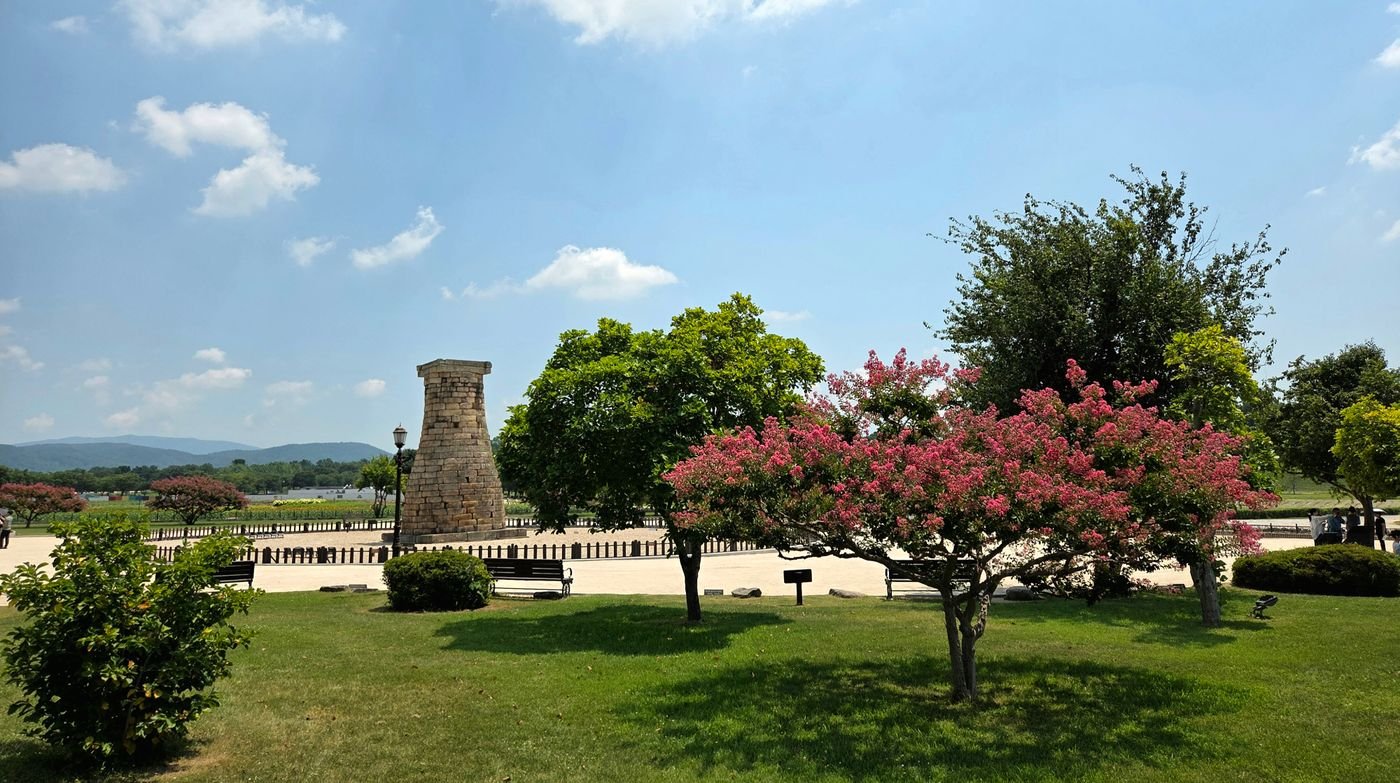
Cheomseongdae Observatory - a bottle-shaped stone tower built in 634 AD under Queen Seondeok - is the oldest surviving astronomical observatory in East Asia. It stands in a flat park surrounded by barley fields and plum trees, three minutes’ walk from Tumuli Park.
Seoul’s Case
Seoul’s Joseon-era palaces - Gyeongbokgung (the main palace, free on the last Wednesday of the month), Changdeokgung (with the Secret Garden, guided tours required), and Deoksugung - provide substantial historical depth for a modern city. But Seoul’s real strength is contemporary Korea. The Gangnam District houses the entertainment agencies that produce K-pop groups. The Gwangjang Market food hall (est. 1905, Korea’s oldest market) serves bindaetteok and mayak gimbap from stalls that have operated for 50 years. Bukchon Hanok Village and Insadong preserve traditional architecture in the middle of a global city.
Seoul’s scale means more of everything: more restaurants, more museums (the National Museum of Korea is among the largest in Asia and free to enter), more transport options, and more of Korea’s rapid modernisation visible in a single walk through the city.
Transport Between the Two
The KTX high-speed train connects Seoul’s Dongdaegu or Busan line to Singyeongju Station (the main access point for Gyeongju) in approximately 2 hours 5 minutes. From Singyeongju, taxis or the city bus take you into central Gyeongju in 20–30 minutes. Return fares run KRW 44,800–55,100 standard class. Trains run hourly most of the day; book ahead via KORAIL’s website or the Korail Talk app, especially on weekends and public holidays.
Gyeongju also sits conveniently between Seoul and Busan on the KTX line, making it a natural two-night stop on a Seoul–Gyeongju–Busan route. From Gyeongju to Busan is 35–45 minutes by bus or 30 minutes by regional train.
Accommodation
Seoul covers every bracket. The Lotte Hotel Seoul on Euljiro (business traveller standard) runs KRW 200,000–350,000; the Park Hyatt Seoul in Gangnam runs KRW 350,000–600,000; budget guesthouses in Hongdae and Insadong start at KRW 30,000 for dormitories and KRW 60,000 for private rooms.
Search hotels in Seoul on Booking.com
Gyeongju hanok guesthouses are one of Korea’s travel highlights. Rooms in a traditional tile-roofed house with ondol floor heating (warm underfloor heating - remove shoes, sleep on floor mats) run KRW 60,000–120,000/night. Many include a traditional Korean breakfast. The area around Gyochon Hanok Village and Hwangnam-dong has the best concentration. Book ahead for weekends, cherry blossom season (early April), and national holidays.
Search hotels in Gyeongju on Booking.com
Food
Gyeongju has distinct local specialties. Hanu beef (Korean native cattle, raised in the surrounding Gyeongbuk region) is some of the finest beef in Korea - a barbecue dinner at a Hwangnam-dong restaurant runs KRW 40,000–70,000/person. Jjimdak (braised chicken with glass noodles and vegetables in a sweet-salty sauce) originated in the Andong region nearby and is available throughout Gyeongju. Gyeongju bread (gyeongju-ppang), a small semi-soft pastry filled with red bean paste, is the city’s street food souvenir and available at every corner bakery from KRW 1,000.
Seoul’s food range is effectively unlimited. Myeongdong’s street food corridor serves a compressed version of Korean street eating; Gwangjang Market is essential for traditional Korean market food; Itaewon has international cuisine from 50+ countries; the restaurant street in Insadong is better for traditional Korean set meals (hanjeongsik) at KRW 20,000–40,000/person.
The Verdict
Gyeongju wins for ancient Korea: if Silla Buddhist temples, burial mounds, and the physical evidence of a 1,000-year kingdom are your travel priorities, Gyeongju delivers an experience that Seoul simply cannot replicate.
Seoul wins for modern Korea: the scale, variety, food, culture, and contemporary energy of Seoul cannot be matched by anywhere in the country.
The standard approach for first-time visitors: 3–4 nights Seoul, 1–2 nights Gyeongju, then continue to Busan. See the Gyeongju things to do guide and Gyeongju day trips for full planning detail.
Plan Your Trip
See our Gyeongju travel guide for the full picture; Bulguksa and Seokguram guide and Gyeongju where to stay cover the details.
✈️ Book flights to South Korea 🛡️ Get travel insurance 📱 South Korea eSIM 🗺️ Gyeongju tours | Seoul tours