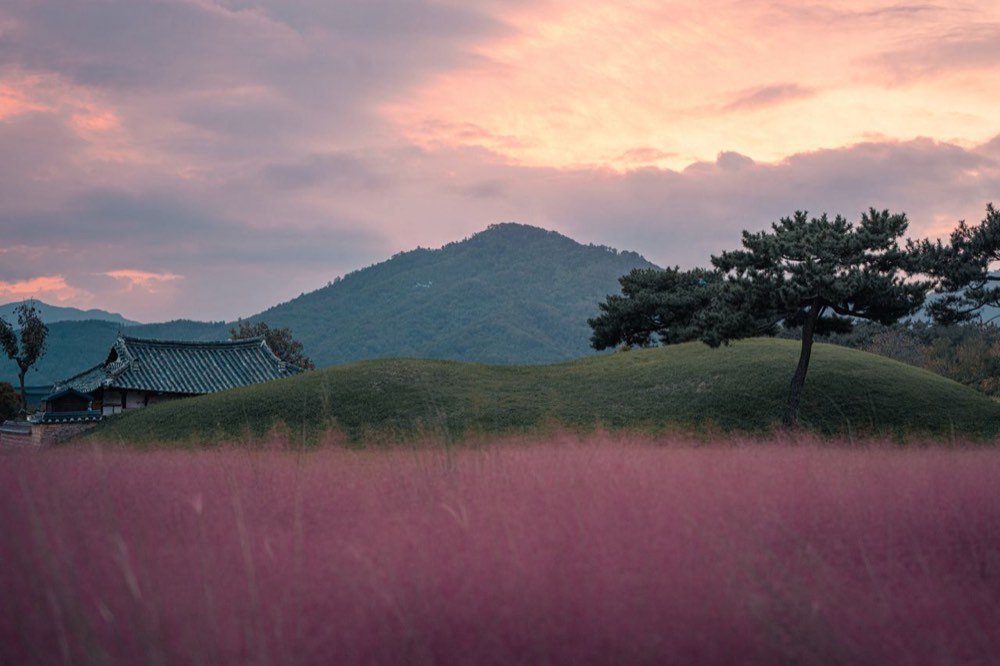
Gyeongju’s transport situation is unlike any other Korean city. The historic core is flat, compact, and genuinely well-suited to cycling - the roads between the royal tombs, Cheomseongdae Observatory, and Anapji Pond carry light traffic and connect naturally by bike lane or quiet side street. But the city’s key outlying sites - Bulguksa Temple and Bomun Lake resort - are far enough from the centre that buses and taxis become necessary. Understanding the split early saves a lot of frustration.
For where to stay in relation to transport, see our Gyeongju hotels guide. For the full site itinerary, see things to do in Gyeongju.
Getting to Gyeongju
Before getting around the city, you first have to arrive - and there are two very different train stations to know about.
Singyeongju KTX Station is where the high-speed KTX train stops. It sits 7 km west of the historic city centre in an otherwise blank suburban location. Arriving here by KTX from Seoul (approximately 2 hours 20 minutes, from around KRW 50,000) or Busan (around 25 minutes, approximately KRW 8,900) leaves you with a taxi ride (KRW 10,000–12,000, 15 minutes) or a city bus (KRW 1,500, 25–30 minutes) to reach the centre. Do not assume you can walk to Gyeongju’s sights from Singyeongju - it is impractical.
Gyeongju Station (the older local station) sits in the centre of the city, a short walk from the historic core. If you are arriving from Busan by the slower Mugunghwa or ITX-Saemaeul train (around 1 hour, KRW 5,900–8,900), you arrive here - right in the middle of everything. This is worth knowing when choosing your service.
For the full picture on KTX, train passes, and intercity transport in Korea, see our KTX and Korail Pass guide.
Cycling the Historic Core
The most satisfying way to cover Gyeongju’s central heritage zone is by bicycle. The terrain is flat, the roads between the main sites are lightly trafficked, and several dedicated cycling paths run alongside the sites themselves - including the long path beside Tumuli Park’s burial mounds.
Rental shops cluster near the south entrance to Tumuli Park (Daereungwon) and along the streets between the park and Gyeongju Station. Typical 2026 rates:
- Standard bicycle: approximately KRW 5,000 per hour / KRW 15,000–20,000 per day
- Electric bicycle: approximately KRW 8,000 per hour / KRW 25,000–30,000 per day
- Tandem or kids’ bike: available at most shops, similar per-hour pricing
Most shops require a small cash deposit (typically KRW 10,000–20,000) and ask for a passport or ID to hold. Return timing is usually flexible - just confirm the closing time when you rent.
A practical circuit for a morning on a bike: start at Tumuli Park → south to Cheomseongdae Observatory (1.5 km) → east to Anapji Pond (1 km) → north to the National Museum (0.5 km) → back to Tumuli Park. The full loop is under 6 km and can be done in 2–3 hours at a relaxed pace including short stops.
Bulguksa Temple is 15 km east and uphill approaching the Tohamsan foothills - too far for most casual cyclists. Use the bus or a taxi for that trip.
City Buses
Gyeongju’s city bus network is functional but infrequent by Seoul or Busan standards. Buses run roughly every 30–40 minutes on most routes, so checking the timetable or arriving early at the stop matters.
Flat fare: KRW 1,500 for all city buses. Tap with a T-money card (also accepted city-wide in Seoul, Busan, and most Korean cities) or pay cash. T-money cards are available at convenience stores.
Key routes for visitors
Bus 10 - the most useful route
Gyeongju Station → Tumuli Park area → Bomun Lake resort → Bulguksa Temple
This is the single most important bus for visitors. It connects the old central station, the historic core, Bomun Lake hotels, and Bulguksa Temple in one line. Journey time from central Gyeongju to Bulguksa is approximately 40 minutes.
Frequency: roughly every 30–40 minutes. Check the current timetable posted at Gyeongju Station or the bus stop near Tumuli Park.
Bus 700 - Bomun Lake express
A faster, more direct connection between central Gyeongju and Bomun Lake resort (approximately 15–20 minutes). Useful if you are staying at Bomun Lake and heading into the historic centre, or returning to a hotel there after an evening at Anapji Pond.
Singyeongju KTX to centre
Multiple buses run between Singyeongju KTX Station and central Gyeongju - check the stop immediately outside the KTX station exit for the current options. Journey time 20–30 minutes, KRW 1,500. If you have heavy luggage, a taxi is significantly more practical.
Taxis
Taxis in Gyeongju are inexpensive by Korean city standards and reliably available in the centre during the day. At night and in quieter areas (Bomun Lake, near Bulguksa), availability drops - it is worth asking your accommodation to call one or using Kakao T (the standard Korean taxi app) to pre-book.
Typical 2026 fares:
| Journey | Approximate fare |
|---|---|
| Singyeongju KTX → central Gyeongju | KRW 10,000–12,000 |
| Central Gyeongju → Bomun Lake | KRW 6,000–8,000 |
| Central Gyeongju → Bulguksa Temple | KRW 15,000–18,000 |
| Bulguksa Temple → Seokguram Grotto | KRW 5,000–7,000 |
| Central Gyeongju → Yangdong Folk Village | KRW 12,000–15,000 |
The standard meter starts at KRW 3,800 (2026). Most drivers do not speak English; showing the name of your destination in Korean characters on your phone is practical - search in Naver Maps or Kakao Maps and screenshot the Korean name before you need it.
Kakao T works in Gyeongju and is the most reliable way to hail a taxi outside peak hours. Download and set up the app (linked payment card required) before arriving.
Getting from Bulguksa to Seokguram Grotto
This short link causes confusion for first-time visitors. Bulguksa Temple and Seokguram Grotto are 4 km apart on the same Tohamsan mountain - close on a map, but the road between them is steep and not suited to walking for most people.
Options:
- City Bus 12 runs between Bulguksa and Seokguram, though frequency is low - check the timetable at the stop outside Bulguksa’s main gate
- Taxi: KRW 5,000–7,000, around 8 minutes
- Tour: Several half-day tours from Gyeongju cover both sites together, which sidesteps the transport problem entirely. See the GetYourGuide listings below for current departures
Most visitors taxi up to Seokguram first (shorter wait for views at the top, less crowded early) and take the bus or walk downhill to Bulguksa.
Bomun Lake and the Resort Zone
Bomun Lake resort area sits 4 km east of central Gyeongju. Most accommodation there is mid-range to luxury - see the Gyeongju accommodation guide for specific properties.
Getting back and forth between Bomun Lake and the historic core is the main transport challenge for visitors staying in the resort zone.
Practical options:
- Bus 10 or Bus 700 from the Bomun Lake bus stop: KRW 1,500, 15–20 minutes to central Gyeongju
- Taxi: KRW 6,000–8,000, 10 minutes
- Bicycle: 4 km on reasonably flat roads - manageable for moderate cyclists. Some Bomun Lake hotels have bikes available for guests
The bus stops at Bomun Lake are clearly marked near the main hotel entrances. Evening service thins out after 9 pm - if you are heading into central Gyeongju for dinner at Anapji Pond, plan your return taxi from Kakao T in advance or ask the restaurant to help you call one.
Renting a Car
Gyeongju is one of the few cities in Korea where a rental car is genuinely useful - not because the city is hard to navigate on public transport, but because the surrounding Gyeongbuk region has sites (Yangdong Folk Village, Oksan Seowon Confucian Academy, Girim Temple) that are poorly served by buses and make natural half-day additions to a Gyeongju itinerary.
Rental desks operate from Singyeongju KTX Station and at some Bomun Lake hotels. Budget approximately KRW 50,000–80,000 per day for a compact car. Korean roads in this area are well-signposted in both Hangul and romanised script. Parking at major heritage sites is paid but available.
If you are on a day trip from Busan, a car is an efficient way to cover Bulguksa, Seokguram, Tumuli Park, and Yangdong in a single loop - roughly 90 km total. See our Gyeongju day trip guide for a suggested sequence. If you arrive by KTX with luggage, a pre-booked private car from Welcome Pickups is an alternative to the 7 km taxi queue at Singyeongju Station.
Practical Notes
T-money card: Buy at any convenience store (GS25, CU, 7-Eleven) for KRW 4,000 including a small initial credit. Top up at the counter. Works on all buses in Gyeongju and on KTX and subway services across Korea.
Naver Maps vs. Google Maps: Google Maps works in Gyeongju but bus timetables are more accurate in Naver Maps (네이버 지도) or Kakao Maps - both are free and available in English. Download one before your trip.
Singyeongju KTX vs. Gyeongju Station: These are 7 km apart. Always confirm which station your train uses before arriving. KTX uses Singyeongju; slower intercity trains use central Gyeongju Station.
Evening transport: The city quietens early. After 9–10 pm, buses become infrequent and taxis are less available outside the central area. If you are visiting Anapji Pond at night (recommended - the illuminated reflection is the best version of the site), book a return taxi in advance via Kakao T or ask your accommodation to arrange one.
Where to Stay
This page is part of our Gyeongju travel guide, and our guides to Gyeongju vs Seoul and Gyeongju Hanok Stays pair well with it.
Planning a trip around this? Browse hotels in Gyeongju on Booking.com and compare areas, prices and cancellation terms before you book.